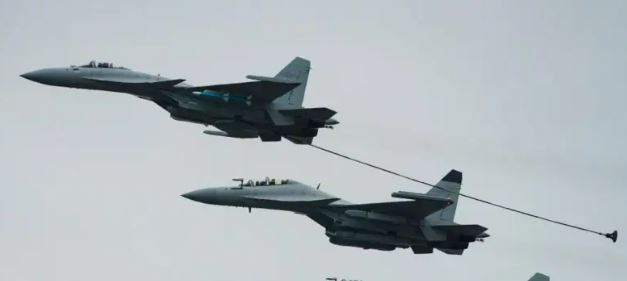
China’s Radar Lock-on Against a Japanese Fighter: What Exactly Happened?
In early 2025, a Chinese military aircraft conducted a radar lock-on against a Japan Air Self-Defense Force (JASDF) fighter over the East China Sea. This incident immediately raised concerns within Japan’s Ministry of Defense, as radar lock-on is widely recognized as a precursor to a potential missile launch. The event did not occur by coincidence; instead, it reflects a continuing pattern of China’s assertive military posture near Japan’s airspace.
According to the official announcement by the Japanese government, the JASDF aircraft was performing a routine surveillance mission within Japan’s Air Defense Identification Zone when a Chinese fighter illuminated it with a fire-control radar. This specific type of radar is designed to track and guide weapons, making its use highly provocative. The Ministry of Defense emphasized that such behavior is extremely dangerous and could trigger unintended escalation between the two countries.
The East China Sea has long been a hotspot for military encounters, especially around the Senkaku Islands, where Chinese aircraft and ships have steadily increased their activity. In recent years, Japan has scrambled its jets thousands of times annually in response to approaching Chinese aircraft. This radar incident therefore represents a significant escalation rather than an isolated event. It illustrates how the security environment surrounding Japan is becoming increasingly unstable.
In conclusion, the radar lock-on incident marks a serious shift in China’s operational behavior. While no physical confrontation occurred, the deliberate use of fire-control radar against a Japanese fighter highlights the fragile state of regional security and the urgent need for crisis-management mechanisms. Japan sees this incident as a clear and unacceptable provocation.
Why Radar Lock-on by a Chinese Aircraft Is Extremely Dangerous
A radar lock-on is not a simple detection action; it is a direct military signal that an attack may follow. When a fire-control radar (FCR) targets an aircraft, the system collects precise distance, velocity, and trajectory data required for missile guidance. In practical terms, this means the aircraft being targeted must assume that a hostile launch could occur at any moment. Therefore, radar lock-on is treated internationally as a high-risk, escalatory act.
The danger lies in the nature of FCR technology itself. Unlike search radars that scan broad areas, fire-control radars narrow their beam to “lock” onto a specific aircraft. This action requires deliberate operator input, eliminating the possibility of an accidental trigger. Pilots know that once locked on, the next step in combat sequence is often missile release, leaving them with mere seconds to react.
Several international incidents demonstrate the severity of radar-directed targeting. For example, NATO pilots have repeatedly reported that radar illumination from Russian aircraft forced them into emergency maneuvers to avoid potential attack. In some conflicts, such as during the Gulf War, radar lock-on has directly preceded missile launches. These examples highlight that lock-on is not symbolic; it represents a genuine escalation in military engagement.
In summary, China’s use of fire-control radar against a Japanese fighter constitutes far more than dangerous flying. It crosses a threshold into behavior associated with hostile intent. Such acts dramatically increase the risk of miscalculation and could trigger broader military confrontation unless strict operational rules and communication channels are enforced.
International Law Implications: Why China’s Radar Lock-on Violates Global Norms
From an international law perspective, China’s radar lock-on against a Japanese fighter is deeply problematic. International aviation and maritime norms clearly prohibit actions that can be interpreted as “hostile intent” during peacetime. The use of fire-control radar falls into this category because it is directly linked to weapons engagement. Therefore, the incident challenges fundamental principles of safety and stability in international airspace.
The most relevant guideline is the Code for Unplanned Encounters at Sea (CUES), which—although non-binding—sets widely accepted rules for preventing military escalation. CUES explicitly encourages states to avoid actions such as locking weapons systems onto foreign aircraft or vessels. Moreover, customary international law prohibits the threat of force, as outlined in Article 2(4) of the UN Charter. Targeting a foreign military aircraft with FCR can be interpreted as a “threat of force,” even if no missile is launched.
Japan argues that China’s action violates these norms and creates an unsafe environment in the East China Sea. Defense analysts note that the incident undermines regional crisis-management efforts, particularly as both countries participate in dialogues intended to reduce unintended clashes. Repeated violations weaken rule-based stability and raise the risk of accidental escalation. Consequently, the act is widely seen as inconsistent with international expectations for responsible military conduct.
In conclusion, the radar lock-on is not merely a bilateral issue but a breach of internationally accepted behavior. It contradicts core principles of restraint, transparency, and predictability that underpin global security norms. For this reason, Japan’s strong diplomatic protest is firmly grounded in international law.
Global Comparisons: How This Radar Incident Differs From Past Cases
The radar lock-on conducted by a Chinese aircraft against a Japanese fighter is not the first instance of such provocation in the region. In 2013, a Chinese naval vessel targeted a Japan Maritime Self-Defense Force ship with fire-control radar near the Senkaku Islands. That event triggered strong diplomatic protests from Japan and led to international concern over China’s expanding military activities. Comparing the 2013 incident with the current one reveals a pattern of repeated escalation rather than isolated actions.
A notable regional comparison is the 2018 dispute between Japan and South Korea, in which a South Korean naval destroyer allegedly illuminated a Japanese patrol aircraft with fire-control radar. Although Seoul denied the accusation, the episode showed how radar-related disputes can quickly strain relationships between neighboring states. In that case, political tensions intensified for months, highlighting how easily trust erodes once fire-control radar is involved.
Similar incidents have also occurred between major powers such as the United States and Russia. American pilots operating in the Baltic region have reported radar lock-ons from Russian aircraft, forcing them into defensive maneuvers. These situations illustrate that radar targeting is universally regarded as a hostile act, regardless of geography. However, the significance of the latest Japan–China incident is amplified by the ongoing rivalry in the East China Sea, where territorial disputes and rising military activity create a more fragile environment.
In summary, past cases demonstrate that radar lock-ons often escalate diplomatic and military tensions. The current incident stands out because it occurs amid China’s unprecedented military buildup and increased assertiveness. Compared with earlier episodes, the potential for miscalculation today is markedly higher, making this event uniquely dangerous.
Impact on Japan–China Relations and Regional Security Stability
The radar lock-on incident significantly affects the already fragile relationship between Japan and China. Both nations maintain complex political and economic ties, yet their security interests increasingly conflict in the East China Sea. By directing fire-control radar at a Japanese fighter, China has crossed a line that Tokyo considers unacceptable. As a result, bilateral communication channels have come under strain, and trust between the two sides has deteriorated further.
This event also disrupts regional stability in East Asia, where multiple states rely on predictable military behavior to prevent accidental clashes. The United States, which operates alongside Japan under the security alliance, is likely to interpret China’s action as part of a broader strategy to challenge the established order. Moreover, Taiwan and ASEAN nations—already wary of China’s expanding military footprint—may increase their own surveillance and defense readiness in response.
The incident occurs at a time when Japan is accelerating defense modernization, including the deployment of F-35 fighters and enhanced electronic-warfare capabilities. China’s provocative action may strengthen public support within Japan for increased defense spending and deeper cooperation with the U.S. and regional partners. This shift could lead to a more unified security posture among democratic states in the Indo-Pacific, counterbalancing China’s influence.
Ultimately, the radar lock-on amplifies tensions in an already competitive security environment. It reinforces perceptions that China is willing to take high-risk actions to assert territorial claims. Unless both sides adopt strong crisis-management frameworks, the likelihood of miscalculation and escalation will continue to grow throughout the region.
Policy Options for Japan: Strengthening Deterrence and Crisis Management
Japan faces a complex strategic environment in which dangerous actions such as radar lock-on require a clear and multifaceted response. The first priority is ensuring operational safety for Japan Air Self-Defense Force pilots. This includes revising engagement protocols, upgrading cockpit warning systems, and expanding training for encounters involving fire-control radar. Such measures allow Japan to react quickly and avoid misjudgment during high-tension interactions.
Beyond immediate operational improvements, Japan must strengthen its deterrence posture. Accelerating deployment of next-generation fighters, enhancing electronic-warfare assets, and expanding the range of early-warning systems will reduce vulnerabilities. Moreover, deeper intelligence sharing with the United States can help detect Chinese radar behavior patterns and identify escalation indicators. These technological and strategic upgrades form the backbone of credible deterrence.
Diplomatically, Japan should push for greater transparency in regional military operations. Tokyo can work with partners to promote adherence to the Code for Unplanned Encounters at Sea (CUES) and advocate for a similar framework for aerial encounters. Additionally, Japan’s diplomatic protests must be paired with continuous dialogue to prevent the breakdown of communication mechanisms. Such dual-track diplomacy balances firmness with stability, reducing the risk of uncontrolled escalation.
In conclusion, Japan’s most effective approach combines operational safety, military modernization, and robust diplomacy. A layered strategy offers the best chance of minimizing risks while preserving regional stability. If Japan strengthens deterrence while keeping communication channels open, it can better manage future provocations and maintain a stable security environment in East Asia.
Future Scenarios: Escalation Risks and How Japan Should Respond
The radar lock-on incident raises important questions about how regional tensions may evolve in the coming months. Analysts widely agree that several pathways are possible, each carrying different levels of risk. Understanding these scenarios is essential for Japan as it prepares both diplomatically and militarily for future challenges. The first scenario is prolonged tension, in which China continues assertive operations without additional escalation. In this case, Japan would face sustained pressure requiring ongoing vigilance and enhanced monitoring.
A second and more dangerous scenario involves further Chinese provocations. These could include repeated radar lock-ons, close-range aerial maneuvers, or expanded military activities near the Senkaku Islands. Such developments could raise the likelihood of an accidental collision or misjudgment. If a pilot interprets a maneuver as hostile, the situation may escalate rapidly, affecting the broader regional security environment. Therefore, crisis-management mechanisms must be strengthened before tensions reach a point of no return.
A third scenario is diplomatic de-escalation. Although less likely in the short term, renewed communication channels between Japan and China could stabilize the situation. Confidence-building measures—such as real-time hotlines or expanded military-to-military dialogues—may help prevent dangerous misunderstandings. For Japan, maintaining openness to diplomatic engagement is important even while upgrading deterrence capabilities. Balanced strategy remains the key for ensuring that de-escalation becomes a viable outcome.
Ultimately, Japan must prepare for all scenarios simultaneously. This means combining robust defense readiness with active diplomacy and coordination with partners such as the United States and Australia. If Japan strengthens its operational resilience while promoting regional crisis-management systems, it can mitigate escalation risks and maintain stability in the Indo-Pacific. Future incidents will test these mechanisms, making proactive preparation essential for national security.
コメントを残す