Most food dates are quality estimates set by the manufacturer, not government safety deadlines. With one exception – infant formula – no federal law requires a date on food at all. "Best if used by" points at peak flavor and texture. "Use by" is the closest thing to a safety cutoff, and it shows up mainly on highly perishable items. Neither one means the food turns dangerous at midnight.
That gap between what the label says and what people assume it says is the whole problem. A USDA Food Safety and Inspection Service fact sheet states flatly that except for infant formula, dates are not an indicator of a product’s safety and are not required by federal law. Yet the date is the single thing most shoppers look at before deciding to keep or toss.
What each date label actually means
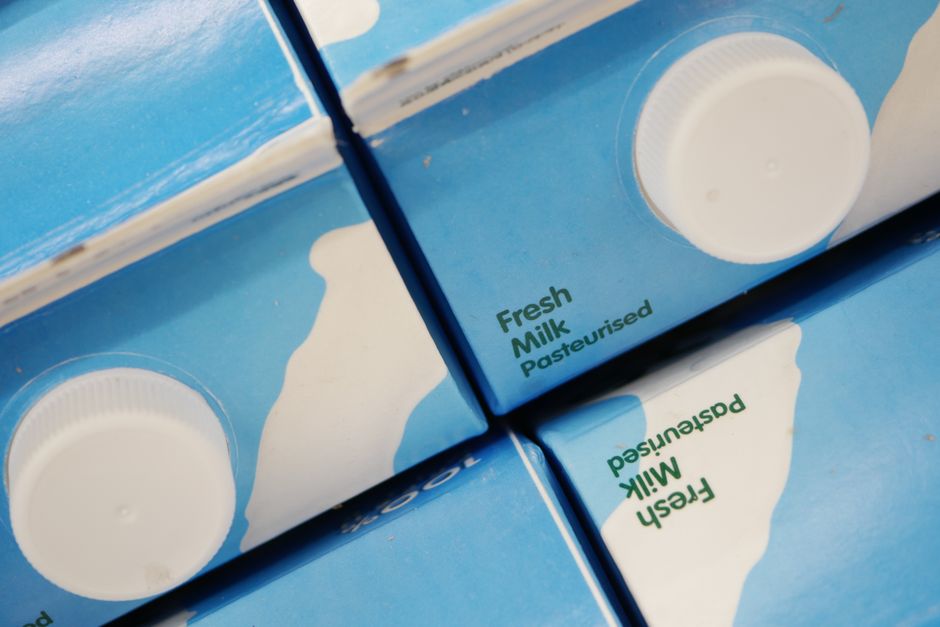
There are really two families of dates on packaged food. Open dating is the plain calendar date a manufacturer or retailer prints for humans to read. Closed dating is the string of letters and numbers stamped near the seam, applied by the manufacturer to identify when and where the product was made.
Here is the decoding table nobody prints on the package:
| Label phrase | What it actually signals | Safety or quality? | Who it’s written for | What it does not tell you |
|---|---|---|---|---|
| Sell by | How long the store should keep the item on display; product still has shelf life left after it | Quality and stock rotation | The retailer | Anything about how long it’s good at home |
| Best if used by / best before | The date through which the product should be at its best flavor, texture, or nutrient content | Quality | The consumer | Whether the food is safe or spoiled |
| Use by | The last date the manufacturer recommends using the product; on infant formula it is a federally required date tied to nutrient content | Mixed – quality under federal guidance, safety under industry and California rules | The consumer | Whether your storage conditions matched the assumption behind the date |
| Closed / coded date (e.g., a lot code or pack date) | Production identification for traceability and recalls | Neither – it’s tracking | The manufacturer and inspectors | Nothing useful about eating quality |
The sell-by date is the one most likely to cost you food. It is a message to the store, not to you, and the whole point of it is that the product still has usable life remaining when the store pulls it. A 2011 industry survey cited in The Dating Game, a joint NRDC and Harvard Food Law and Policy Clinic report, found 91 percent of consumers said they had discarded food on its sell-by date out of safety concern.
"Use by" is where sources genuinely disagree, and it’s worth knowing why. FSIS defines a use-by date as the last date recommended while the product is at peak quality and says it is not a safety date except on infant formula. The grocery industry defines it the opposite way. When the Food Marketing Institute and the Grocery Manufacturers Association launched their labeling initiative in 2017, they assigned "USE By" to the small set of products that are highly perishable or carry a safety concern over time, with "BEST If Used By" covering quality. In practice, if a package says "use by" rather than "best if used by," the manufacturer is usually flagging it as the more perishable of the two – so treating it as the stricter date is the reasonable read.
Is there actually a law requiring these dates?

For nearly everything in your kitchen, no. FSIS repeats the point in its guidance documents: except for infant formula, product dating is not required by federal regulations. When a manufacturer does apply a date voluntarily to a meat, poultry, or egg product, FSIS requires only that it be truthful, that it include the month and day (plus the year on shelf-stable and frozen items), and that a phrase explaining the date sit immediately next to it.
The infant formula exception belongs to the FDA, not USDA. The FSIS footnote is explicit that the Food and Drug Administration requires a "use by" date on infant formula and that USDA does not require quality or safety date labels for products under its own jurisdiction. That date exists because formula has to still contain each nutrient in the amount stated on the label. It is a nutritional guarantee more than a spoilage warning, which is a different kind of promise from anything else on the shelf. Agencies police different parts of the food and drug supply with very different levels of intensity – the same split shows up in how the FDA evaluates safety before approval for pharmaceuticals versus how it handles voluntary food labeling.
The one hard requirement USDA does impose is about traceability, not freshness: a pack date on poultry and on thermally processed, commercially sterile products, so lots can be traced during an outbreak investigation.
State law fills some of the vacuum, unevenly. As of July 1, 2026, California’s AB 660 is the first mandatory state date-labeling standard in the country: food items manufactured on or after that date must use "best if used by" or "best if used or frozen by" for quality, or "use by" or "use or freeze by" for safety, and consumer-facing "sell by" dates are prohibited. Coded sell-by information for store stock rotation is still allowed, because that was never meant for shoppers in the first place. The law carves out eggs, infant formula, and several beverage and shellfish categories where other rules already dictate the wording.
How manufacturers come up with the date

There is no government formula. The date is the output of the company’s own shelf-life program, and the methods fall into a few recognizable buckets.
Accelerated shelf-life testing (ASLT) is the fast one. Samples go into environmental chambers at elevated temperature and controlled humidity, spoilage reactions speed up, and the results are extrapolated back to normal storage using a Q10 factor – a value describing how much faster chemical deterioration runs as temperature rises. Testing labs commonly report that a few weeks in a hot chamber can stand in for many months on a pantry shelf, which is the only practical way to validate a 12-month date on a product launching next quarter.
ASLT has a hard limit that explains a lot about which foods get which label. Campden BRI, a UK food research organization, cautions that accelerated testing should not be used to set a microbiologically safe shelf life and that perishable foods carrying a use-by date should be tested in real time under realistic storage conditions. Raising the temperature does not speed up every organism and every reaction at the same rate, and it can change which microbes dominate altogether. So dry and ambient goods get accelerated testing; chilled ready-to-eat foods get slow, real-time trials.
For safety-critical products, labs run challenge studies: the product is deliberately inoculated with a target organism at a known level, then held under defined storage – and sometimes deliberate abuse conditions – to see whether the formulation suppresses growth. Contract labs typically design these against National Advisory Committee on Microbiological Criteria for Foods guidelines, and note that accelerated data has to be confirmed by real-time results. Listeria monocytogenes is the usual target for refrigerated ready-to-eat foods with long shelf lives.
Then each company picks its own endpoint. One brand might end shelf life when a trained sensory panel first detects staleness; another might allow noticeably more drift before calling it. Both then subtract a safety margin sized to their own tolerance for complaints, retailer requirements, and litigation risk. The Dating Game report makes the same observation from the legal side: for the vast majority of products, manufacturers set shelf life by their own methods. That is why two nearly identical crackers from two companies can carry dates months apart, and why a date is better understood as a company’s conservative estimate than as a measurement of the food in your hand.
Is it safe to eat food after the date passes?
Safety tracks storage far more closely than it tracks the calendar. FSIS points to the time and temperature a food experiences during distribution and home storage as the factors that determine whether it stays wholesome, and says that if a date passes during home storage, a properly handled product should still be safe until spoilage becomes evident. A carton of milk left in a hot car for two hours has aged more than one that sat at 38 degrees F (3 C) for a week past the printed date.
Food type matters just as much. Shelf-stable canned goods, dry pasta, and frozen items lose quality slowly and gradually; salt, sugar, and low water activity keep pathogens from growing in the first place. Chilled ready-to-eat foods are the opposite case. Deli meats, soft cheeses, smoked seafood, and pre-cut refrigerated items support Listeria growth at refrigerator temperatures, which is precisely why those categories get real-time microbiology testing rather than an accelerated estimate – and why a use-by date on them carries more weight than a best-by date on cereal.
Sensory checks do real work for the quality-dated majority: off smells, sliminess, mold, fizzing in something that should be still, a bulging or leaking package. They do not work for the pathogens that matter most, because Listeria and Salmonella do not announce themselves by smell. The same logic drives commercial kitchen rules, where temperature logs and holding times matter more than package dates – the mechanics of that are covered in how restaurant health inspections actually grade food safety. If you have a medical reason to be cautious – pregnancy, immune suppression, feeding an infant – that is a conversation for a clinician, not a label.
Why this confusion wastes so much food
The scale is measurable. A national survey conducted in January 2025 by The Harris Poll for researchers at the Harvard Law School Food Law and Policy Clinic, ReFED, and Johns Hopkins found that 43 percent of US consumers always or usually discard food near or past the label date, up from 37 percent in 2016, and 88 percent do so at least occasionally. Confusion is getting worse, not better: 44 percent wrongly believed date-label phrases are federally regulated, compared with 36 percent nine years earlier.
That behavior has a price tag. ReFED estimates date-label confusion alone leads US consumers to throw away roughly three billion pounds of food worth about $7 billion every year, and its modeling suggests standardizing labels could prevent at least 425,000 tons of waste annually. USDA, for its part, estimates 30 percent of the food supply is lost or wasted at the retail and consumer levels.
Industry tried to fix this voluntarily before California legislated. GMA and FMI convened 25 companies in February 2017 to collapse more than 10 competing phrases into two, and by December 2018 a GMA survey found 87 percent of CPG products carried the "Best If Used By" wording, with near-total adoption projected for 2020. Adoption clearly stalled short of that, since more than 50 differently phrased date labels were still in circulation when AB 660 was drafted.
Frequently asked questions
Are expiration dates real, or just liability protection? Both, in layers. The underlying shelf-life data is real laboratory work. The number printed on the package is that data plus a margin the company chose, and the size of that margin reflects commercial caution as much as biology.
Does freezing reset the clock? Freezing stops the microbial clock but not the quality clock. Frozen food stays safe indefinitely at 0 degrees F (-18 C), while texture, color, and flavor keep degrading through oxidation and ice crystal damage. This is the logic behind California’s "best if used or frozen by" and "use or freeze by" phrasings.
Why does the same product have different dates in different stores? Different production lots, different distribution times, and different retailer specifications. Some chains require a minimum remaining shelf life at delivery, which changes what reaches the shelf and when.
Which date deserves the most respect? The use-by date on infant formula. It is the only one backed by a federal requirement, and after it the formula may no longer deliver the nutrient levels its label claims – a problem for an infant whose entire diet is that can.
A workable rule: if the phrase mentions quality ("best if used by," "best before"), treat the date as advice about flavor and check the food itself. If the phrase is "use by" on something perishable and refrigerated, treat it as a limit. And if the phrase is "sell by," recognize that it was never addressed to you.