The FDA does not test drugs. Drug companies run the trials; FDA scientists review the submitted data, inspect trial sites and manufacturing plants, and decide whether the evidence shows a drug is safe and effective enough to sell. The full path runs from lab discovery through three phases of human trials to a final application review, and commonly cited estimates put the total at roughly 8 to 12 years.
That first sentence is the part most people get wrong, and it changes how you should read the phrase "FDA approved." Approval is a verdict on somebody else’s homework, delivered by reviewers who were not in the room when the data was generated. Understanding that division of labor makes the rest of the process, including its weak points, much easier to follow.
Does the FDA actually test the drugs it approves?

No. The agency’s own explanation of product approval is blunt about it: FDA reviews the results of laboratory, animal, and human testing conducted by companies, and, in its words, "FDA does not develop or test products itself," per FDA’s page on product approval. The Center for Drug Evaluation and Research (CDER), which handles most prescription drugs, says the same thing about itself: companies must test the drug first and send CDER the evidence, and the center does not test drugs itself beyond limited research on quality and safety standards.
So what does the FDA actually do? Four things. It sets the evidentiary bar a company has to clear. It decides whether human testing may begin. It reviews the raw data, not just the company’s summary of it, using teams of physicians, statisticians, chemists, and pharmacologists. And it inspects: clinical trial records, investigator conduct, and the factory where the drug will be made.
That is an audit model, not a laboratory model. If you have ever wondered about the real difference between an appraisal, an inspection, and an assessment, the same distinction applies here. The FDA is not generating a new measurement; it is verifying that someone else’s measurements were done properly and mean what the company claims.
The practical consequence is that the quality of an approval depends on the quality of the submitted data and the agency’s ability to detect problems in it. That is why inspections, statistical re-analysis of the sponsor’s datasets, and audits of individual trial sites matter so much. They are the checks on a system where the party with a financial interest in the outcome also collects the evidence.
The path from lab discovery to human trials
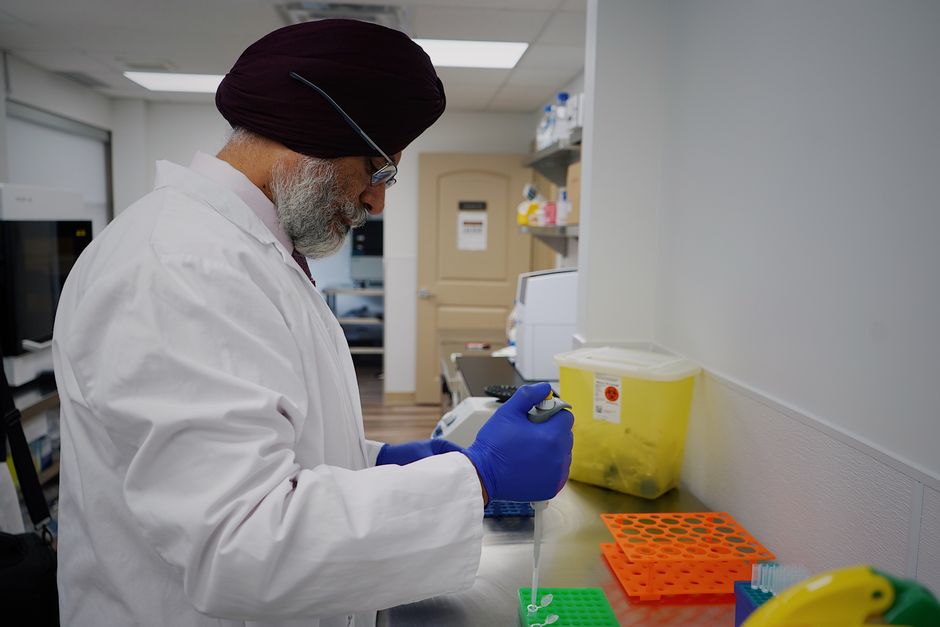
Before anyone takes a dose, the sponsor does preclinical work: laboratory and animal studies to answer basic questions about toxicity, how the compound behaves in a living system, and what dose range might be tolerable. FDA’s overview of the development process treats this as its own stage, separate from clinical research, and it typically consumes several years.
To move into humans, the sponsor files an Investigational New Drug application (IND). This is not an approval application; it is a request for permission to start testing. It contains the animal data, the manufacturing information, the qualifications of the clinical investigators, and the protocol for the first human study.
Then a clock starts. FDA’s IND page states that once an IND is submitted, the sponsor must wait 30 calendar days before starting any clinical trial, and the agency uses that window to check that research subjects will not face unreasonable risk. There is usually no approval letter. If the FDA says nothing, the trial may proceed.
If the agency does object, it issues a clinical hold. FDA’s clinical research page lists grounds including unreasonable risk to participants and investigators who are not qualified. A hold has no fixed expiration; the study stays frozen until the FDA lifts it.
Attrition before this point is brutal and rarely quantified in news coverage. Most compounds that show promise in a test tube never reach an IND at all, filtered out by toxicity, poor absorption, or the simple problem of not being manufacturable at scale.
What happens in each clinical trial phase

The three phases are not arbitrary bureaucratic hoops. Each answers a different question, and each is designed so that failure happens as cheaply and as safely as possible.
Phase 1 asks whether humans can tolerate the drug at all. Per FDA’s description of clinical research, these studies enroll roughly 20 to 100 healthy volunteers or people with the condition, run several months, and focus on safety and dose range rather than whether the drug works.
Phase 2 asks whether it works, in up to several hundred patients who actually have the disease, over a period that can stretch from several months to two years. Phase 3 is the confirmatory stage: typically 300 to 3,000 patients across many sites, running one to four years, powered to detect real efficacy and to surface side effects too uncommon to appear in a few hundred people.
Why most drugs fail during Phase 2 or 3

Failure is the norm, not the exception. The Congressional Budget Office reports that only about 12 percent of drugs entering clinical trials are ultimately approved by the FDA, with average research and development cost per approved drug estimated between under $1 billion and more than $2 billion.
Estimates vary by method and by disease. Researchers at MIT found that nearly 14 percent of drugs in clinical trials eventually win approval, ranging from 33.4 percent for infectious-disease vaccines down to 3.4 percent for cancer. Both figures land in the same neighborhood; the spread by therapeutic area is the more useful number, because it explains why oncology programs look so risky and vaccine programs so comparatively safe.
Phase 2 is where the most candidates die, and the reason is structural. Phase 1 tests tolerability, which many compounds pass. Phase 2 is the first honest test of the underlying biological hypothesis, and hypotheses about human disease are wrong far more often than they are right.
What an expedited pathway changes and doesn’t change

The FDA runs several expedited programs, and they work on different levers. Fast track and breakthrough therapy designation increase agency interaction and rolling submission of data during development. Accelerated approval changes what counts as adequate evidence, allowing approval based on a surrogate endpoint that is reasonably likely to predict benefit. Priority review changes only the review clock.
None of them lowers the statutory standard of substantial evidence of effectiveness and adequate safety. FDA’s priority review page describes the designation as directing additional attention and resources to an application, not as relaxing what the application must show. A drug that gets a faster review still has to clear the same bar.
Filing the New Drug Application: who reviews what, and how long it takes

When trials finish, the sponsor compiles everything into a marketing application: a New Drug Application (NDA) for a conventional small-molecule drug, or a Biologics License Application (BLA) for a product like a vaccine, monoclonal antibody, or cell therapy. These run to tens of thousands of pages and include patient-level datasets, manufacturing specifications, and the proposed label.
The review is done by a multidisciplinary team. FDA describes medical officers, statisticians, chemists who evaluate how the drug was made and whether it is stable and free of meaningful impurities, and microbiologists for antimicrobial products, among others. Statisticians frequently re-run the analyses from the sponsor’s raw data rather than accepting the sponsor’s summary tables.
The timelines here are the most concrete in the entire process. Under the user-fee performance goals, the FDA’s target is action within 10 months for a standard review and 6 months for a priority review, as stated on FDA’s priority review page above. Those are goals rather than legal deadlines, and the clock can be extended by roughly three months if the sponsor submits a major amendment mid-review.
Inspections run in parallel. Investigators visit clinical trial sites to verify that the data in the application matches the source records, and pre-approval inspections check the manufacturing facility against good manufacturing practice requirements. The logic is the same inspect-and-verify model behind how health inspectors grade restaurants: the operator makes claims about its own process, and an outside inspector spot-checks whether reality matches.
The agency may also convene an advisory committee of outside experts to discuss the application in public. Those committees vote, but FDA’s own definitions page is explicit that committee recommendations are not binding on CDER, though the agency considers them carefully. The FDA has gone against advisory committee votes in both directions.
Stage-by-stage: who does the work and who decides

| Stage | Who performs the work | Who decides or reviews | Typical duration |
|---|---|---|---|
| Discovery and preclinical | Sponsor (company or academic lab) | Sponsor; no FDA decision required yet | Several years |
| IND submission | Sponsor prepares and files | FDA reviews for safety; 30-day wait before trials may start | 30 days minimum |
| Phase 1 | Sponsor and contracted trial sites | Sponsor decides whether to continue; FDA can impose a clinical hold | Several months, 20-100 participants |
| Phase 2 | Sponsor and trial sites | Sponsor; FDA advises through meetings | Months to 2 years, up to several hundred participants |
| Phase 3 | Sponsor across multiple sites | Sponsor; FDA advises on design pre-submission | 1-4 years, 300-3,000 participants |
| NDA or BLA review | Sponsor compiles the application | FDA review team decides; advisory committee may advise, nonbinding | 10 months standard, 6 months priority |
| Facility and site inspections | Sponsor hosts | FDA investigators | Within the review window |
| Phase 4 and post-market | Sponsor conducts required studies | FDA monitors, can require label changes or withdrawal | Years after approval |
Read the second and third columns together and a pattern emerges. The sponsor controls the work at every stage. The FDA controls two gates: entry into human testing, and entry into the market. Between those gates, its leverage is advisory, plus the clinical hold as a safety brake.
What a Complete Response Letter actually means

If the FDA will not approve an application, it issues a Complete Response Letter. Widely reported as a "rejection," a CRL is more precisely a determination that the application cannot be approved in its present form, with the specific deficiencies spelled out.
Those deficiencies fall into recognizable buckets. Announcing its first public release of CRLs, the FDA said the letters give the public insight into the most common deficiencies sponsors must fix before approval, and it cited a 2015 analysis by FDA researchers finding that sponsors omitted 85 percent of the agency’s safety and efficacy concerns when publicly announcing a non-approval. Manufacturing and facility problems are a frequent cause, sometimes with clean clinical data.
There is no fixed deadline to respond. A sponsor can resubmit with new data, fix a factory finding, run an additional trial, or abandon the program. A Class 1 resubmission (minor fixes) restarts a two-month review clock; a Class 2 resubmission gets six months.
The disclosure rules changed recently, and older articles get this wrong. CRLs were historically confidential, disclosed only if the company chose to describe them. In July 2025 the FDA published more than 200 CRLs issued between 2020 and 2024, and on September 4, 2025 it announced it would release future CRLs promptly after issuing them to sponsors, alongside a batch of 89 previously unpublished letters tied to pending or withdrawn applications. Law firms tracking the change have questioned whether real-time release of letters for unapproved applications is consistent with FDA’s own confidentiality regulations, as Arnold & Porter noted, so the practice may yet be litigated.
Why some approved drugs still carry a Phase 4 requirement
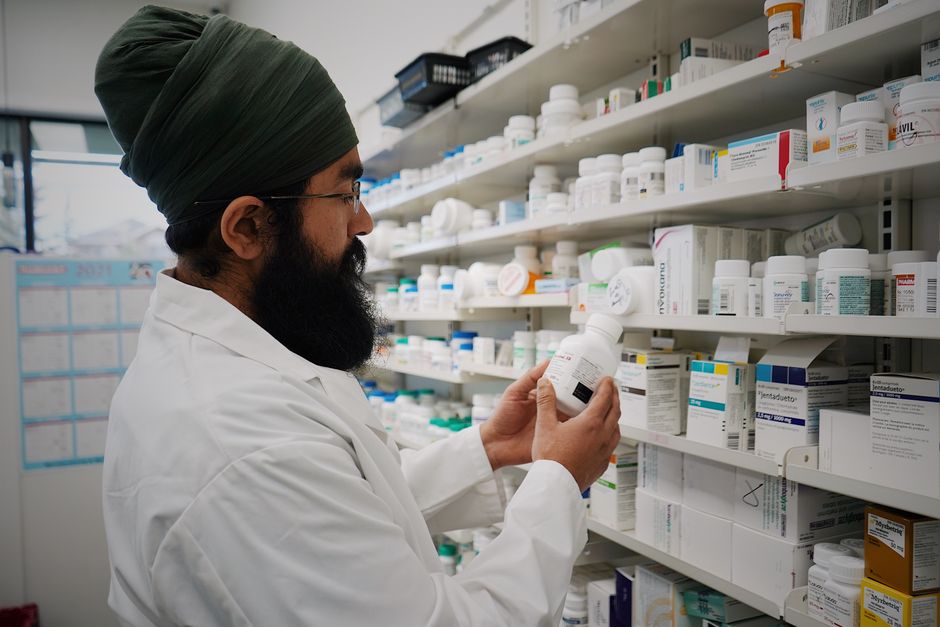
Approval does not end the testing. Phase 4 studies track what happens when a drug meets the general population: patients with multiple conditions, patients on five other medications, patients who take it for a decade rather than the 18 months a Phase 3 trial ran. Rare adverse events that appear in 1 patient in 10,000 are effectively invisible in a 2,000-person trial.
For accelerated approvals the obligation is central rather than optional. FDA’s definitions page explains that under accelerated development, manufacturers must continue testing after approval to demonstrate actual therapeutic benefit, and if they do not, the agency can withdraw the product more easily than usual.
That authority became sharper with the Food and Drug Omnibus Reform Act of 2022, which created expedited withdrawal procedures. The FDA used them for the first time to pull Pepaxto (melphalan flufenamide) in February 2024 after its confirmatory trial failed to verify benefit. According to the FDA Law Blog’s analysis, the new procedure took about seven months from proposal to withdrawal, compared with 30 months for Makena in 2023 and 11 months for Avastin’s breast cancer indication in 2011.
Frequently asked questions

How long does FDA approval take on average? There are two different answers, and mixing them causes confusion. The full development arc from discovery to approval is commonly estimated at 8 to 12 years, but the FDA does not publish a single official average because it varies enormously by disease. The agency’s own committed clocks are narrow: 30 days for an IND, and 10 or 6 months for an application review.
Can the FDA reject a drug even after successful Phase 3 trials? Yes, and it happens regularly. Positive Phase 3 results do not guarantee approval; the FDA may disagree with the endpoint chosen, find the effect size clinically meaningless, identify a safety signal the sponsor discounted, or refuse on manufacturing grounds unrelated to the clinical data.
What is the difference between FDA approved and FDA cleared? "Approved" applies to drugs and high-risk devices that went through a full premarket review of safety and effectiveness. "Cleared" applies to moderate-risk medical devices that demonstrated substantial equivalence to a device already on the market, which is a lower bar and does not require new clinical trials. Dietary supplements get neither.
Does approval mean a drug has no side effects? No. The FDA frames every decision as a benefit-risk judgment and states plainly on its product approval page that no regulated product is totally risk-free, and that it will tolerate more risk when the potential benefit is large. That is why the label lists adverse events; approval means the benefits outweighed the risks for the population studied, not that risks are absent.
If you are trying to judge how much weight a particular "FDA approved" claim deserves, the useful question is which pathway it came through. A standard approval backed by two large randomized Phase 3 trials rests on far more evidence than an accelerated approval based on a surrogate endpoint whose confirmatory trial is still enrolling. Both labels read identically in an advertisement. Questions about a specific medication and your own situation belong with your physician or pharmacist, who can see the label and your history together.