Every state uses a version of the same two-part form: you fill out the identifying information, and a licensed medical professional certifies that a specific mobility limitation meets the state’s legal definition. Approval turns on documented functional impairment, not the name of your diagnosis. Denials almost always trace back to an incomplete certification section or a condition that doesn’t clear the statutory threshold.
That distinction – function over diagnosis – explains most of what confuses applicants, including why two people with identical conditions can get different answers from the same DMV.
How the application actually works: two parts, one form
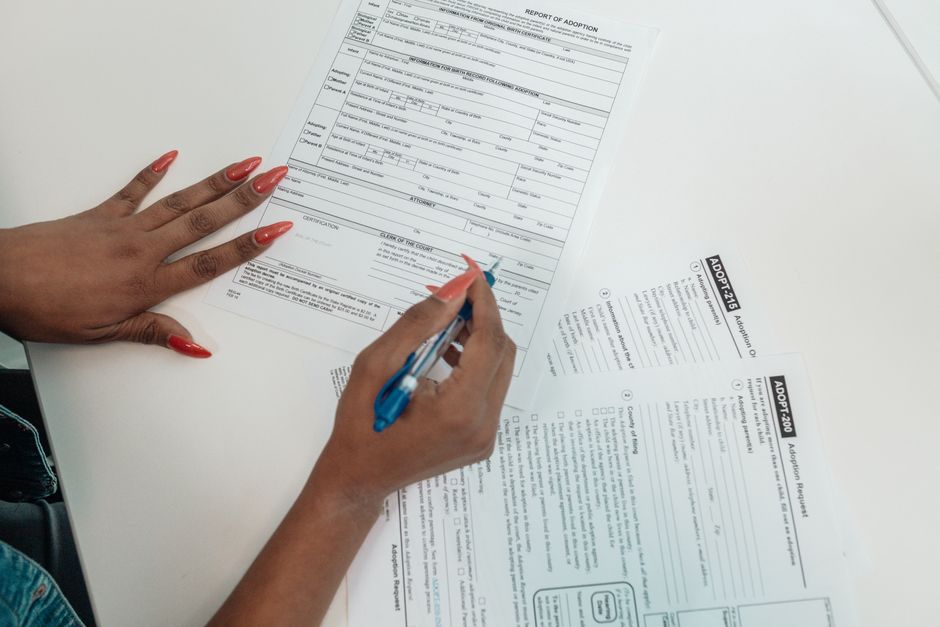
Page one belongs to the applicant. You supply your name, address, date of birth, identification number, and which credential you want: a temporary placard, a long-term placard, disability license plates, or some combination. Nothing on this page decides anything. It routes the application and establishes who the credential belongs to.
Page two is the medical certification, and it is the part that determines the outcome. A licensed professional checks which statutory condition applies and signs. Who may sign varies: Michigan accepts certification from a list of licensed medical professionals on its Disability Parking Placard Application (BFS-108), and Texas allows a licensed physician, podiatrist, optometrist, physician assistant, or advanced practice nurse to certify the disabled parking application. Several states add chiropractors, usually limited to specific conditions.
The agency issuing the placard does not examine you. It checks the form for completeness and relies on the signature. That is the mechanism in a sentence: the state outsources the medical judgment to a licensed professional who is accountable for it, then administers the paperwork. A handful of jurisdictions add a second layer – in New York City, for example, the Department of Transportation forwards applications to the Health Department’s Medical Certification Unit for review.
Submission channels differ more than the form does. Texas routes completed applications through county tax assessor-collector offices. Michigan takes them at Secretary of State branches, by mail, or online for renewals. Colorado accepts them at county motor vehicle offices and through myDMV. The DMV counter handles placards the same way it handles any other credentialing transaction, including matters like a driver’s license points suspension hearing – as a records process with a defined evidentiary standard.
What conditions actually qualify for a placard

State statutes describe what you cannot do, not what you have. Texas Transportation Code 681.001 is a representative list: inability to walk 200 feet without stopping to rest, inability to walk without a brace, cane, crutch, prosthetic device, or another person’s assistance, inability to ambulate without a wheelchair, forced expiratory volume under one liter or resting arterial oxygen tension below 60 mm Hg, use of portable oxygen, an American Heart Association Class III or IV cardiac condition, or severe arthritic, neurological, or orthopedic limitation. Legal blindness qualifies in roughly half the states, typically for use as a passenger.
The 200-foot walking test is the most common threshold nationally, though not universal – some state forms print 100 feet, and Missouri’s prints 50. Two hundred feet is about two-thirds of a football field, or the distance from a far parking space to a supermarket entrance.
This is why diagnosis labels don’t decide the outcome. Rheumatoid arthritis, multiple sclerosis, congestive heart failure, and COPD all appear constantly in approved applications, and all appear in cases where a provider declines to certify, because the question on the form is what the person can do over a measured distance. A patient with well-controlled Class II heart failure who walks a mile daily does not meet the Texas cardiac criterion; a patient with the same diagnosis at Class III does.
Mental health conditions and cognitive impairments generally fall outside these definitions unless they produce a qualifying physical limitation. The framework here is narrower than the functional capacity analysis used in how Social Security disability claims get decided, which considers capacity for work across physical and mental domains. A parking placard statute asks one narrow question about ambulation and nothing else.
Why applications get denied

The most frequent rejection has nothing to do with eligibility. NYC DOT states plainly that incomplete applications are returned with a letter requesting the missing information. A missing license number, an unchecked condition box, a signature in the wrong field, or an absent notarization where the state requires one all produce the same result: the packet comes back.
The second category is substantive. A provider reviews the statutory list, concludes the patient doesn’t meet any item, and declines to sign. This is not the agency denying you – the application never reaches a reviewable stage. People often experience this as a rejection by the DMV when it was a clinical determination made in an exam room.
Three other patterns account for most of the rest:
- Stale documentation. Some states expect the certification to reflect a recent evaluation. A form signed off a chart note from three years ago can be rejected.
- Requesting permanent status for a documented temporary condition. If the certification says the limitation is expected to resolve, the state issues the short-term credential regardless of which box you checked.
- Mismatched identity details. The name on the application has to match the name on the identification document being presented.
The practical consequence is that most denials are correctable. A returned application is a request for information, not a final adjudication.
Temporary vs. permanent placards: criteria and renewal cycles

The vocabulary misleads people. A "permanent" placard is not permanent – it is a credential for a condition not expected to improve, and it still expires on a schedule the state sets. Those schedules vary more than almost anything else in this system.
| State | Temporary placard term | Long-term placard term | New medical certification at renewal? |
|---|---|---|---|
| California | Up to 180 days ($6 fee) | 2 years, expiring June 30 of odd-numbered years | No; a signature is required at the third renewal, roughly every 6 years |
| Texas | 6 months or less ($5 fee) | 4 years | Generally no; renewal uses the applicant portions plus the expiring placard or original application |
| Colorado | 90 days (short-term) | 3 years | Self-certification at years 3 and 6; new professional certification at year 9 |
| Michigan | 1 to 6 months, not renewable | 4 years, expiring on the holder’s birthday | No for permanent blue placards |
| New York (state permit) | Up to 6 months (red hangtag) | Up to 5 years (blue hangtag) | Varies by issuing agent; NYC city permits renew unless a medical re-examination is required |
California’s two-year cycle sounds burdensome and isn’t: DMV Fast Facts FFVR 7 confirms the permanent placard is valid for two years and expires June 30 of every odd-numbered year, with the replacement mailed automatically. Under a 2017 law, holders of six years or more must return a signature before the next placard is issued, but no new medical form is involved.
Colorado runs the most structured re-verification ladder in the sample. Its DR 2816 instruction sheet states that the applicant must re-certify every three years, with self-certification permitted at the three- and six-year marks and a professional’s validation required again at year nine. Michigan takes the opposite approach – permanent blue placards are valid four years, expire on the applicant’s birthday, and renewal requires no new certification.
The decision rule that follows: if your condition is documented as stable and unchanging, the renewal burden depends entirely on which state issued the placard, not on your health. A Colorado resident will sit for a fresh clinical certification roughly every nine years. A Michigan resident with the same condition may never need another one.
How long approval takes and what happens after submission

For a complete form submitted to a typical state DMV, two to six weeks is the common range, and some states issue temporary placards over the counter the same day. Urban permit systems with a separate medical review layer run much longer. NYC DOT’s published estimate for its city permit is up to 90 business days from submission to decision, and replacement of a mailed-in damaged permit can take 45 days.
Placards are generally mailed to the address on file with the agency, not handed over at the counter, which makes an outdated address a quiet source of delay. California’s renewal service lets holders update the address during the transaction for exactly this reason. If you have recently moved or updated identification during the REAL ID deadline changes at the DMV, confirming that both records show the same address is worth doing before you submit.
Post-surgical and post-injury cases are where in-person issuance matters most, since a six-month placard processed over eight weeks delivers a third of its value. Several states let a county office or branch print a temporary placard immediately once the signed certification is presented.
What to do if a placard application is denied

Resubmission is the usual path, because the usual problem is paperwork. A returned incomplete application typically needs one field corrected and nothing more, and there is normally no limit on how many times you may reapply or any fee for doing so where the placard itself is free.
Where a medical reviewer rather than a clerk rejected the application, a formal appeal may exist. NYC DOT sends a denial letter explaining the appeal process when the Health Department denies an application. Not every state has an analogous route; in many, the practical remedy is a new application supported by better documentation.
When a provider declines to certify, a second opinion from another qualified provider is legitimate, and so is returning to the same provider with more specific functional information – a documented walking test, a cardiology classification, pulmonary function values. Those are the data points the statute actually asks about, and a chart that doesn’t contain them gives the provider nothing to sign against.
Certification carries real exposure. States treat false certification and placard misuse as offenses with fines and, in some jurisdictions, criminal penalties, and providers are aware of this when they weigh a borderline case. The gatekeeping is the price of a system in which no government employee examines the applicant.
Frequently asked questions
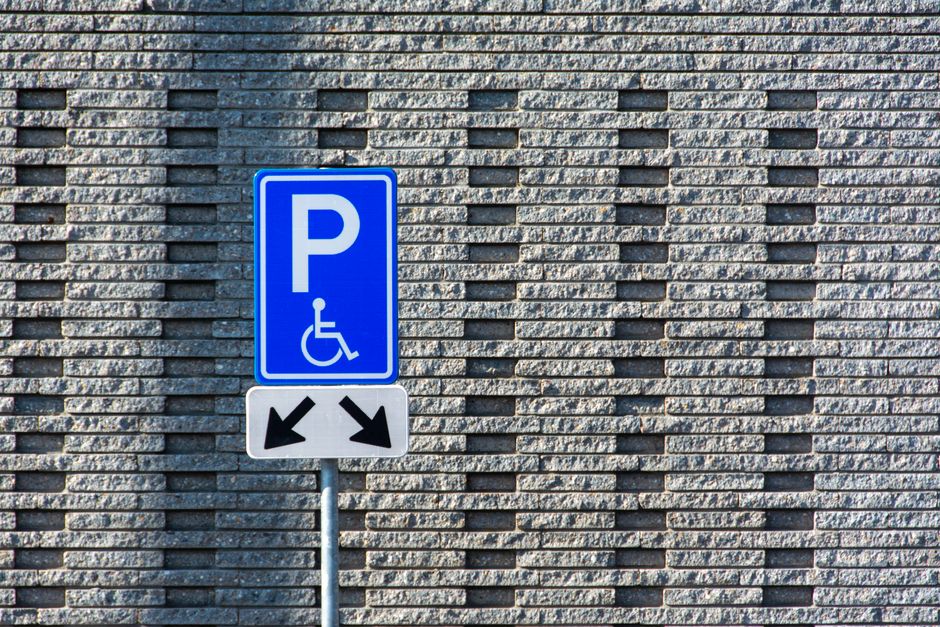
Is my placard valid in other states? In practice, yes. All 50 states recognize valid out-of-state placards, and the mechanism is the Department of Transportation’s Uniform System for Parking for Persons with Disabilities at 23 CFR Part 1235, which includes an interstate reciprocity provision. Sources disagree about whether that provision is binding: some guides describe it as a federal mandate, while the Congressional Research Service’s review of federal law on disability parking privileges notes the Uniform System is a set of guidelines the federal government encourages states to adopt, and that a court treated it as a voluntary program. The CRS analysis is the more careful reading. The outcome for travelers is the same, because nearly all states adopted the reciprocity language. What does not travel are the extras – free metered parking and extended time limits are set locally.
Does the car have to be registered in my name? No. A placard is issued to a person and moves between vehicles. It is valid only when the person it was issued to is traveling in that vehicle, as driver or passenger. Disability license plates work differently and stay attached to one registered vehicle.
Can someone other than a physician sign? In most states, yes. Physician assistants and nurse practitioners are widely accepted, optometrists for vision-based qualification, and podiatrists and chiropractors in some states for conditions within their scope.
What happens if the placard is lost or stolen? Replacement generally requires a form and sometimes a fee, without new medical certification – Michigan replaces damaged placards at no charge, and Texas counties verify the original issuance record instead of requiring a fresh evaluation.
If you are helping an aging parent through this, the single highest-value step is arriving at the medical appointment with the state’s form already printed and the correct boxes identified. The provider’s time is the bottleneck, and the statutory language on the form is what they need to read before they can sign anything.