A Social Security disability claim passes through three separate reviewers before anyone calls it decided. A field office checks the non-medical side: work credits, earnings, identity, and for SSI, income and resources. A state Disability Determination Services (DDS) office then assigns an examiner and a medical consultant who apply a five-step medical test. If the answer is no and you appeal, an administrative law judge eventually holds a hearing. Each handoff has its own timeline, and each has wildly different odds.
Understanding how Social Security disability claims are reviewed matters because the stage you are sitting in largely predicts your chances. The initial decision and the hearing are decided by completely different people under different conditions, and the appeal in between almost never changes anything.
Who actually reviews your claim, and in what order

The first office to touch your file is a Social Security field office, whether you applied online, by phone, or in person. Field office staff are not medical reviewers. They confirm the non-medical requirements: for SSDI, whether you have enough recent work credits to be insured; for SSI, whether your income and countable resources fall under the limits. They also verify identity, date of birth, and work history.
Only after those boxes are checked does the file move to your state’s DDS. This is a state agency operating under federal rules and federal funding, which is why the people deciding your medical eligibility do not work in the building where you filed. DDS assigns a disability examiner, who develops the evidence, and pairs that examiner with a medical or psychological consultant who signs off on the medical findings.
DDS is where almost all of the waiting happens. The examiner requests records from every provider you listed, and if the record is thin or outdated, DDS schedules a consultative examination with a doctor it pays for. That exam is not treatment and it is not a second opinion in the usual sense; it exists to fill a documented gap.
If DDS denies the claim, the file goes back through the same structure on appeal. Reconsideration returns it to DDS, to a different examiner. Only when that second denial arrives does the case leave the state agency and go to a federal administrative law judge at an SSA hearing office. Above the judge sit two more levels: the Appeals Council, and then a lawsuit in federal district court.
So the order is: field office, state DDS, state DDS again, federal ALJ, Appeals Council, federal court. Four of those six are appeals, which tells you something about how the system expects claims to go.
The 5-step sequential evaluation DDS uses to decide medical eligibility

The medical test is not a judgment call dressed up in paperwork. It is a fixed sequence written into federal regulation at 20 CFR 404.1520, and the regulation states plainly that the five steps are followed in a set order and that the process stops as soon as a step produces a definite finding of disabled or not disabled.
Here is what each step asks:
- Are you working above the earnings limit? If your countable monthly earnings exceed the substantial gainful activity (SGA) threshold, the claim is denied without any look at your medical records. AARP’s reference on SGA puts the 2026 figure at $1,690 a month, or $2,830 for statutorily blind SSDI claimants.
- Is the impairment severe? It must more than minimally limit basic work activities, and it must have lasted or be expected to last at least 12 continuous months or result in death.
- Does it meet or medically equal a listing? SSA maintains a catalog of impairments with specific clinical criteria. Meet one and the claim is approved on the spot, with no further questions about work.
- Can you still do your past relevant work? Before this step, the examiner assesses your residual functional capacity: what you can still do on a sustained basis despite the impairments. If that capacity covers a job you held in the relevant past, the claim is denied.
- Can you adjust to any other work? This is the only step where age, education, and transferable skills formally enter. A 58-year-old with a limited education and a lifetime of heavy labor and a 27-year-old with a desk-work background can have identical physical limitations and opposite outcomes.
Two things follow from the structure. First, a denial means you failed every applicable step, not one. Second, step 3 and step 5 are the two places where the decision is made for most people, because step 3 is a bright-line medical match and step 5 is where the vocational rules bite. The sequence works like a decision tree with hard thresholds rather than a weighted score, which is closer to how other government benefit calculations work than most applicants expect.
The full process from application to decision, step by step
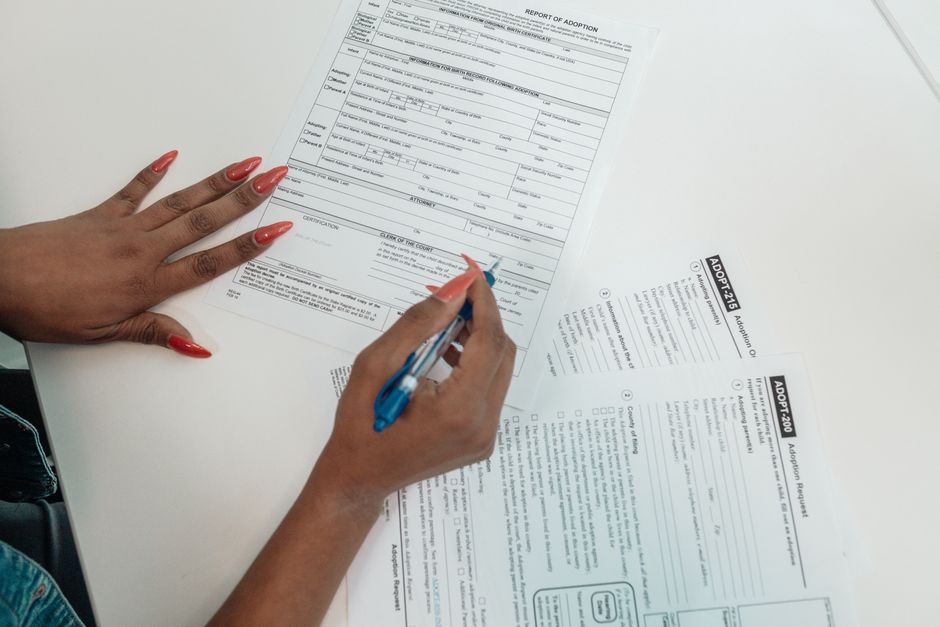
- File. Online, by phone, or at a field office. The application collects medical sources, work history for the past several years, and the date you say you stopped being able to work.
- Field office non-medical screen. Insured status for SSDI, or income and resources for SSI. This typically closes in a matter of weeks, not months.
- Transfer to DDS. The examiner orders medical records, sends you function reports and work history forms, and decides whether a consultative exam is needed.
- Initial determination. The examiner and the medical consultant run the five-step sequence and issue an allowance or a denial. A notice goes out by mail.
- Reconsideration, if denied. You have 60 days from receipt of the notice to request it, per SSA’s reconsideration page. SSA assumes you received the letter five days after its date. A different DDS examiner reviews the entire file plus anything new.
- ALJ hearing request. Again 60 days, per SSA’s hearing request page. The hearing may be in person, by phone, or by video. The judge can question you directly and often calls a vocational expert.
- Decision and beyond. The ALJ issues a written decision. An unfavorable one can go to the Appeals Council, and after that to federal district court, which is a civil lawsuit with filing deadlines of its own. That final stage runs on court rules rather than agency rules, closer in feel to how small claims court works, step by step, though with far higher stakes and no small-claims informality.
Missing a 60-day window usually means starting over with a new application, which resets the clock and can cost back pay.
How long each stage takes and the odds of approval at each level

SSA publishes live processing figures on its performance dashboard. As of August 2026, the average initial disability decision took 188 days, down from 217 days a year earlier, and reconsiderations averaged 212 days, improved from 239. Hearings were running around 275 days as of mid-2026, against an agency goal of 270.
| Stage | Who decides | Recent average wait | Approximate approval rate |
|---|---|---|---|
| Initial determination | State DDS examiner plus medical consultant | ~188 days (Aug 2026) | ~36% (FY2025) |
| Reconsideration | A different DDS examiner | ~212 days (Aug 2026) | ~16% (FY2025) |
| ALJ hearing | Federal administrative law judge | ~275 days (mid-2026) | ~50-58% |
| Appeals Council | Appeals Council attorneys and members | Varies widely | ~1% allowed outright |
| Federal district court | US district judge | Varies widely | ~1% allowed, ~65% remanded |
The approval figures come from SSA workload data as compiled by practitioners. One analysis of SSA’s FY 2025 disability data reports 64% of the 2.2 million initial claims decided that year were denied, a 16% allowance rate at reconsideration, and a 50% allowance rate across 277,740 ALJ decisions. Disability Secrets reports the same 16% reconsideration figure but puts the national hearing rate nearer 58%, with state variation from roughly 45% to 70%.
Those two hearing numbers disagree because they count different denominators; dismissals and remanded cases can be included or excluded. Treat the hearing rate as "roughly half, varying heavily by judge and state" rather than a precise figure. The reconsideration number, by contrast, is consistent across sources and across years.
The two reviews most applicants never hear about

A favorable determination from DDS is not the end of the file. Federal law requires SSA to second-guess a large share of its own approvals before a single dollar moves.
SSA’s policy manual on federal quality review states that the Social Security Act requires the agency to review at least half of all favorable DDS disability determinations in initial claims before taking any action to put them into effect. That is pre-effectuation review (PER), conducted by the Office of Quality Review. It is deliberately one-sided: the statute targets allowances, because the point is to catch erroneous payments before they start, not to give denied claimants another look.
The scale is documented. SSA’s FY 2023 annual report on pre-effectuation reviews records 240,777 Title II allowances reviewed, representing 50.8% of all DDS allowances that year. Of those, 10,805 were returned to DDS as deficient, a 4.5% return rate, and the agency estimated 4,439 of them would ultimately be changed from allowance to denial. That is a reversal rate of about 1.8% of reviewed allowances.
Separately, SSA runs ongoing quality assurance sampling of DDS work that is not limited to allowances, and the Office of Appellate Operations performs its own pre-effectuation reviews of hearing-level decisions, which is why an ALJ’s favorable decision can also sit before payments begin.
Practical upshot: if a claim is approved but payments do not start, the file may simply be sitting in a quality queue. The odds that such a review flips an approval are low, but not zero, and the review adds weeks. Neither mechanism is an appeal and neither is available to a claimant who was denied.
Why reconsideration denies most appeals

The 16% reconsideration approval rate is not evidence that reconsideration examiners are harsher. It is a structural result.
Reconsideration sends the file back to the same state agency, to an examiner who did not work the original claim, applying the identical five-step test from 20 CFR 404.1520 to largely the identical evidence. SSA describes reconsideration as a complete review that includes the original evidence plus anything new that is obtained or submitted. If nothing new arrives, the second examiner is being asked whether the first examiner read the same records correctly, and most of the time the answer is yes.
That is why the only variable with real leverage at this stage is what changes in the file. New treatment notes dated after the initial denial, a specialist’s objective findings, imaging, hospitalization records, or a detailed functional assessment from a treating source all give the second examiner something the first one never saw. Evidence that merely restates what is already in the file does not.
The hearing level produces different outcomes for a different structural reason: a judge sees and questions the claimant, can take testimony about day-to-day limitations that never appear in a chart, and hears a vocational expert respond to specific hypothetical restrictions. That is a change in the kind of evidence available, not just the quantity.
Frequently asked questions

How long does the whole thing take? If you are approved at the initial level, roughly six months is the current national average. If you are denied and go through reconsideration and a hearing, the cumulative wait has recently run well past two years, since each stage averages six to nine months on top of the time it takes you to file each appeal.
Can reconsideration actually reverse a denial? Yes, about one time in six nationally. The claims that flip tend to be the ones where the medical picture changed or where records that were missing at the initial stage finally arrived.
Does having a representative change how DDS reviews the file? The legal standard is the same either way. What representation can affect is what is in the file by the time a decision is made and whether deadlines are met. Fee arrangements for Social Security representatives are regulated and must be approved by SSA, so questions about cost are worth raising with a qualified representative directly.
Is SSI reviewed differently from SSDI? The medical test is identical for adults; SSI runs under a parallel regulation, 20 CFR 416.920. The difference is the non-medical screen. SSDI asks whether you worked enough recently to be insured. SSI asks about income and countable resources, and because those can change month to month, SSI eligibility is re-examined over time in a way SSDI insured status is not. Children’s SSI claims use a different disability standard entirely.
What if my condition gets worse while I am waiting? New evidence can be submitted at any point before a determination or decision is made at the level where your claim is pending. Evidence that arrives after a decision is issued belongs to the next appeal level, not the one that just closed.
One decision rule worth carrying away: before spending effort on the appeal form itself, look at what has entered your medical record since the denial notice. The form moves your claim to the next stage; the records are what change the answer.