If an airline involuntarily bumps you from an oversold flight, federal rules set your payout by formula, not by negotiation: 200 percent of your one-way fare (capped at $1,075) if you are rebooked to arrive one to two hours late domestically, and 400 percent (capped at $2,150) if you arrive later than that. Volunteering is different. It has no legal minimum and no legal maximum, which is why gate offers occasionally reach four or five figures.
Note those cap numbers. Plenty of guides, and a lot of airline-facing summaries, still print $775 and $1,550. Those were the old figures. <cite index="26-4,26-6">A DOT final rule raised the denied boarding compensation liability limits from $775 and $1,550 to $1,075 and $2,150, effective January 22, 2025</cite>, and the higher amounts now appear in the regulation itself. If you were bumped recently and handed a check based on the older caps, that is the first thing to check.
Voluntary vs. involuntary bumping: why the distinction changes everything
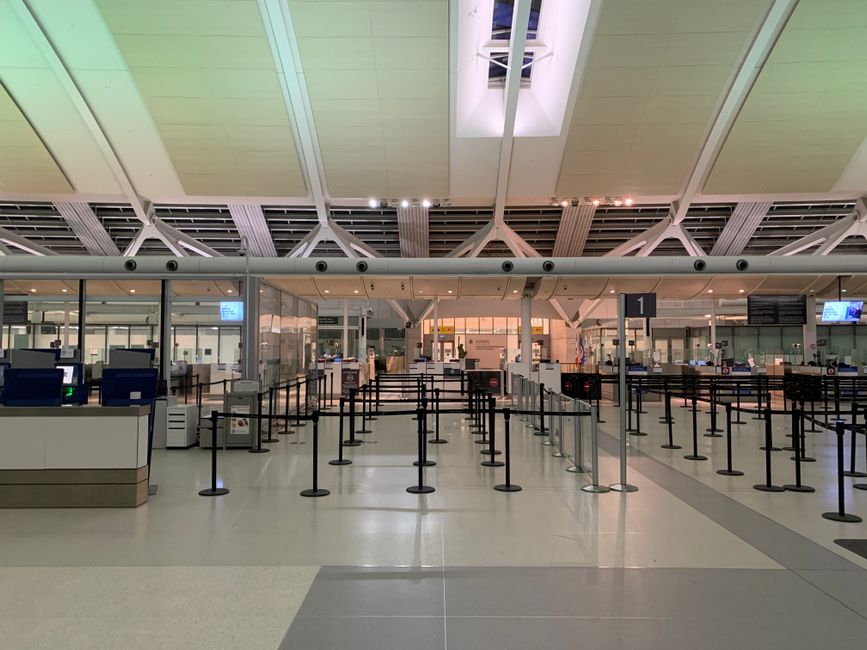
Airlines are not allowed to skip straight to bumping people. <cite index="44-6,44-7">When a flight is oversold, DOT regulations require the carrier to seek volunteers willing to give up their seats for compensation, and only if there are not enough volunteers may the airline bump passengers involuntarily.</cite> Almost all bumping ends there: <cite index="17-4,17-5,17-6">more than 300,000 US passengers a year have been denied boarding since 2021, but only about 25,000 of those were involuntary – the vast majority volunteered</cite>.
The two categories are governed by completely different logic. A volunteer is making a private deal: the airline offers something, you accept or decline, and no federal formula sets the price. A passenger denied boarding involuntarily is owed a specific amount under 14 CFR Part 250, whether the airline likes it or not, plus a written notice explaining those rights.
That gap is exactly where things go wrong in practice. In one enforcement case, <cite index="49-7,49-8">DOT’s Aviation Enforcement Office found that Delta had failed to seek volunteers before bumping passengers involuntarily, bumped passengers without giving them the required written notice or telling them they had a right to cash compensation, and classified some involuntarily bumped passengers as volunteers – which stripped them of compensation rights and produced inaccurate reports to DOT</cite>. <cite index="49-5">DOT fined Delta $750,000 and ordered it to stop.</cite>
The practical takeaway: if you did not affirmatively agree to give up your seat, you were not a volunteer, no matter what the gate agent writes in the system. This is one of those cases where the real difference between similar-sounding official terms decides how much money changes hands.
| Volunteer | Involuntary denied boarding | |
|---|---|---|
| Legal minimum payment | None | 200% or 400% of one-way fare |
| Legal maximum | None | None; the dollar figures cap what carriers are required to pay |
| Typical form | Voucher, gift card, sometimes cash, sometimes upgrades | Cash or check, unless you accept something else |
| Written rights notice | Not part of the deal | Required |
| Negotiable | Yes | No, but the airline may pay more voluntarily |
The DOT compensation formula for involuntary bumping
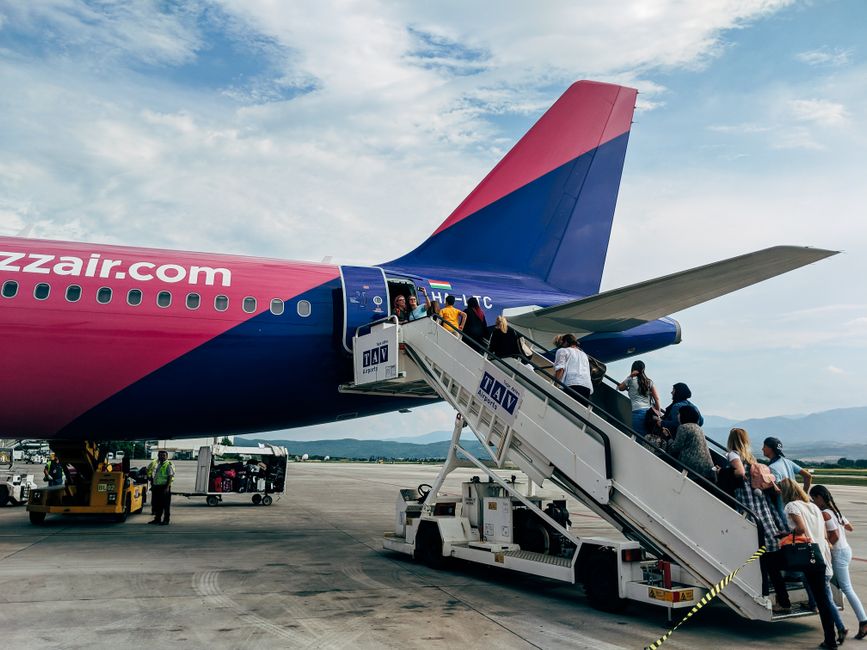
The regulation keys everything to one number: how late the substitute flight is planned to get you to your final destination or first stopover, measured against your original scheduled arrival. <cite index="8-4">No compensation is required if the alternate transportation, at the time the arrangement is made, is planned to arrive no later than one hour after the planned arrival of your original flight.</cite> Miss that window and the formula kicks in.
| Substitute arrival vs. original arrival | Domestic flights | International flights departing the US | What you are owed |
|---|---|---|---|
| 1 hour late or less | 0-1 hour | 0-1 hour | Nothing required |
| Moderately late | More than 1 but less than 2 hours | More than 1 but less than 4 hours | 200% of one-way fare, up to $1,075 |
| Very late, or no rebooking offered | 2 hours or more | 4 hours or more | 400% of one-way fare, up to $2,150 |
The bracket wording and the $1,075 figure come straight from 14 CFR 250.5, and the international windows of one to four hours and four hours plus are the long-standing structure of the rule as Travelers United summarizes it, with the older dollar caps. Because the payment is a percentage of fare, a cheap ticket produces a small payout: 400 percent of a $120 fare is $480, nowhere near the cap.
Two wrinkles matter. First, <cite index="2-4">if your ticket does not show a fare – an award ticket, or one issued by a consolidator – compensation is based on the lowest cash, check, or credit card price paid for a ticket in the same class of service on that flight</cite>, and <cite index="8-6">the rule explicitly covers passengers holding zero fare tickets</cite>. Second, the caps move. <cite index="32-10">Section 250.5(e) requires DOT to review the denied boarding compensation limits every two years using a set inflation formula</cite>, so expect another adjustment rather than treating $1,075 and $2,150 as permanent. There was also a brief transition: <cite index="30-5">DOT announced it would not take enforcement action until March 20, 2025 against carriers that had not yet complied with the new limits</cite>.
Payment form and timing are regulated too. <cite index="12-3,12-4,12-5">The airline must give a qualifying passenger a cash or check payment on the day and at the place the involuntary denied boarding happens; if your substitute flight leaves before payment can be made, it must be sent within 24 hours, and the carrier may offer free or discounted transportation instead of cash</cite> – but only with your agreement, and <cite index="8-4">only after disclosing all material restrictions such as administrative fees, capacity limits, and blackout dates</cite>. If you want to see how a federal regulatory formula gets applied step by step in a different agency’s rules, the pattern is similar: a fixed test, a schedule of outcomes, and narrow exceptions.
Why volunteering can pay more than the legal minimum

The formula above describes a ceiling on what the airline must pay, not a ceiling on what it can pay. DOT made that explicit when it rewrote the terminology: <cite index="5-7,5-8">the dollar amounts are "denied boarding compensation liability limits," meaning they let carriers limit what they are required to pay, and a paragraph was added to section 250.5 confirming that nothing in the rule prevents an airline from offering more</cite>.
The bidding dynamic at the gate
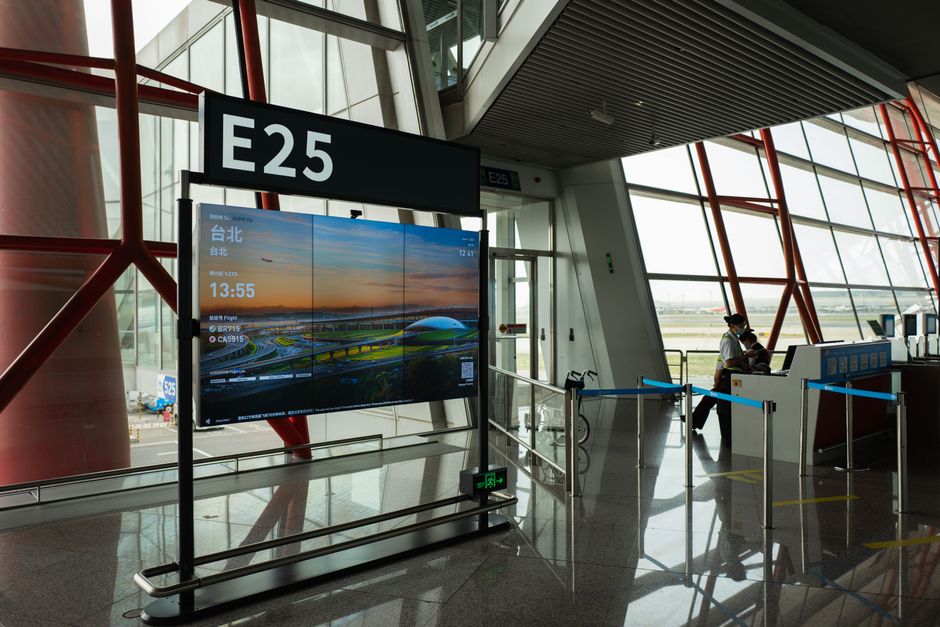
An oversold flight is a small auction with a deadline. The agent needs a fixed number of seats before departure, has no legal cap on the offer, and faces a real cost if the flight goes out late or the airline ends up bumping someone involuntarily and generating a complaint. So offers escalate. After the 2017 United incident, carriers raised the amounts their staff could authorize: <cite index="21-6">Delta lifted the gate agent limit from $800 to $2,000 and the supervisor limit from $1,350 to $9,950</cite>.
Vouchers are the cheaper currency for the airline, which is why they dominate. A $2,000 travel credit with an expiration date and fare restrictions is not worth $2,000 in cash, and unlike involuntary compensation, there is no rule entitling a volunteer to cash. Before saying yes, the questions worth asking are what happens if nobody volunteers, when the next confirmed seat departs, whether the credit expires, and whether hotel and meals are included for an overnight.
Real cases where offers reached four figures
| Case | What was offered | Why it is instructive |
|---|---|---|
| Delta, Grand Rapids to Minneapolis, 2022 | <cite index="17-2,17-3">Eight travelers ended up with $10,000 each for giving up their seats</cite>; <cite index="25-13">the offer reportedly started at $5,000 and rose to $10,000</cite> | Shows the auction mechanic: the price climbs until enough hands go up |
| United, 2018 | <cite index="23-1,23-2,23-3">Agents raised the volunteer offer to $2,000, and after the passenger said she wanted cash rather than credit, an agent offered a $10,000 voucher</cite> | <cite index="23-10">She had paid $163 for the one-way ticket</cite>, so the involuntary formula would have produced only a few hundred dollars |
| Delta enforcement pattern, 2023 | <cite index="17-14,17-15,17-16">Delta recorded 146,136 volunteers in 2023 and no passengers bumped involuntarily on its own flights, which suggests its offers are high enough to attract volunteers</cite> | Generous voluntary offers are a substitute for involuntary bumping, not an add-on |
Those are outliers, and treating them as the going rate is a mistake – most volunteers are settling for a few hundred dollars. The useful lesson is arithmetic: on a cheap ticket, a voucher offer of $800 can beat the involuntary payout you would receive, while on an expensive long-haul fare, the 400 percent formula can be worth more than the voucher the agent is waving around. Do the multiplication before you decide.
When you get nothing: exceptions and disqualifications
The involuntary compensation right has holes in it, and they are listed in the passenger notice text that airlines are required to publish. <cite index="12-1">You are not entitled to denied boarding compensation if you have not fully complied with the airline’s ticketing, check-in, and reconfirmation requirements, or you are not acceptable for transportation under the carrier’s usual rules; if you are denied boarding because the flight was canceled; if a smaller capacity aircraft was substituted for safety or operational reasons; if the aircraft has 60 or fewer seats and you are denied boarding due to safety-related weight and balance limits; or if you are seated in a different section of the aircraft at no extra charge, with a refund of the difference if the new seat carries a lower fare.</cite>
Read those carefully, because two of them swallow a lot of real situations. A canceled flight is not a bump, so the compensation formula does not apply at all – your remedy there is a refund or rebooking under different rules. And an aircraft swap to a smaller plane, which feels identical to a bump from the passenger’s seat, can remove the entitlement entirely when it is done for safety or operational reasons.
Missing a check-in deadline is the most avoidable disqualifier. If the airline’s published cutoff is 45 minutes before departure and you clear it at 40, you can be denied boarding on an oversold flight with no payment owed. Being refused carriage over travel documents, a visa problem, or a security issue is also not denied boarding compensation territory; that is a refusal of transportation, not an oversale.
US rules vs. EU261: don’t assume the same numbers apply abroad
If your bumped flight touches Europe, the US percentages may be irrelevant. EU rules ignore what you paid and pay a flat amount based on distance, under Regulation (EC) No 261/2004. <cite index="36-1">The tiers are 250 euros for flights of 1,500 km or less, 400 euros for intra-EU flights over 1,500 km and other flights between 1,500 and 3,500 km, and 600 euros for everything else.</cite>
| US (14 CFR Part 250) | EU261 | |
|---|---|---|
| Basis for the amount | Percentage of your one-way fare | Flight distance |
| Amounts | 200% up to $1,075; 400% up to $2,150 | 250, 400, or 600 euros |
| Cheap ticket outcome | Small payout | Same payout as a full-fare passenger |
| Reduction possible? | No, brackets are fixed | Yes, can be halved when rerouting limits the arrival delay |
| Who is covered | Oversold flights on covered carriers to or from the US | Departures from covered European airports on any airline, plus arrivals on EU-licensed carriers |
Scope is where transatlantic travelers get tripped up. <cite index="34-3,34-4">EU passenger rights apply to all flights departing from airports in the EU, Iceland, Norway, and Switzerland regardless of the airline’s nationality, and to all flights operated by Community carriers even when they depart from airports outside Europe.</cite> So a Chicago to Frankfurt flight on a US carrier is generally a DOT matter on the way out and an EU261 matter on the way back on an EU airline. <cite index="34-1">Note also that the EU amount can be reduced by 50 percent when the airline offers rerouting and the resulting arrival delay stays within the regulation’s limits</cite>, a discount that has no US equivalent.
One more difference worth internalizing: <cite index="42-14,42-15">EU compensation depends on flight distance rather than ticket price, so a budget-fare passenger receives the same amount as someone in business class</cite>. The US rule does the opposite. Same event, opposite logic.
Frequently asked questions
Do I have to take a travel voucher? Not for an involuntary bump. <cite index="12-3,12-5">The default is a cash or check payment at the airport; free or discounted transportation is an alternative the carrier may offer in place of cash</cite>, which means you can decline it and ask for the payment instead. For a voluntary bump, there is no such right – the voucher is the deal on the table.
How fast should I be paid? <cite index="11-2,11-3">On the day and at the place the involuntary denied boarding occurs, or within 24 hours if the airline puts you on a substitute flight that leaves before payment can be processed.</cite>
Is the compensation instead of my ticket? No. It is on top of your rebooking or refund, and it does not require you to sign away anything else.
What if I think I was shortchanged? Complaints go to DOT’s aviation consumer protection office through its consumer complaint form. Enforcement of the bumping rules is a real activity, not a formality, as the $750,000 Delta penalty described in DOT’s own release shows. If money at stake is significant or an airline has denied a documented claim, that is a question for a consumer attorney rather than a web article.
A simple decision rule for the gate: multiply your one-way fare by four, compare it to the highest voluntary offer on the table, and factor in the value of the hours you would lose either way. If the voucher beats the formula and you have flexibility, volunteering usually wins. If the offer is thin and your fare was high, saying nothing and letting the airline bump you involuntarily puts you into a regulated payout paid in cash, on the same day, with a written explanation of your rights attached.