"In transit" means your package has left its origin facility but hasn’t reached the delivery vehicle yet. It is an umbrella status, not a single event: it covers hub sorting, loading onto trucks or planes, and the travel legs between facilities. Tracking pages don’t fire an update at every one of those steps, which is why the status can sit frozen for a day or two while the box is still moving.
That gap between what’s happening physically and what you can see on screen is the whole reason this status causes so much anxiety. Below is the actual scan sequence, how the three big US carriers label it differently, and a concrete rule for deciding when silence has stopped being normal.
What "in transit" actually covers

Think of the tracking timeline as having four meaningful phases: accepted, in transit, out for delivery, delivered. Everything between the first scan at the origin facility and the moment the package is loaded onto the truck that will bring it to your door falls into that second bucket. A shipment can display "in transit" on day one and still display it on day five without anything being wrong.
Carriers reuse the phrase deliberately. USPS in particular applies variations of it at multiple points in a single journey, which is why you may see "In Transit to Next Facility" appear more than once with no other detail attached. Shipping-side vendors who watch this closely describe it as a status applied at several stages rather than one discrete event.
The reason updates are lumpy is mechanical. A scan is generated when a barcode passes a reader, and readers sit at fixed points: acceptance counters, hub induction belts, sort outputs, dock loaders, and delivery scanners. Between those points, nothing reads the label. A truck crossing three states produces no scans at all while it drives, so a package that is very actively moving looks identical to one sitting still.
Two related statuses often get confused with it. "Accepted" or "origin scan" means the carrier has physical custody but the package hasn’t left the first building. "Out for delivery" means it is on the final vehicle. Anything in the middle, including a package that is sitting on a plane, is in transit.
The scan-by-scan journey: origin to delivery

Here is the sequence most domestic parcels follow, with a note on which steps actually produce a visible scan:
- Acceptance or origin scan. Generated at a post office counter, a drop box sweep, or when a driver picks up from a warehouse. This one almost always appears. For USPS Ground Advantage, the transit clock starts at this acceptance scan, not when the seller printed the label, which is why an order can look stuck at "label created" for days if the seller batched shipments.
- Departure from origin facility. Sometimes scanned, sometimes rolled into the next event.
- Hub arrival and sort. The package enters an automated sorter, gets read, and is routed to an output chute based on destination ZIP or postal code. This normally produces a scan, and it is the point where a mis-scan sends a parcel down the wrong chute.
- Linehaul. The truck, plane, or rail leg between hubs. This is the big silence. No scan is generated mid-route because there is no reader on the trailer. A coast-to-coast ground leg can run 3 to 4 days with a single scan at each end.
- Destination facility arrival and sort. Another read, another routing decision, this time down to the local delivery unit.
- Handoff to the delivery unit. The package moves to the post office, UPS center, or FedEx station that serves your street. Often scanned on arrival there.
- Out for delivery. Scanned as it is loaded onto the delivery vehicle in the morning.
Count the scans in that list: roughly five or six visible events for a journey involving a dozen physical handoffs. Third-party logistics explainers break the same sequence down into departure scans, hub arrival, and sorting events for exactly this reason.
The practical takeaway: a 12- to 48-hour gap with no update is structurally normal, because it usually means your package is on a linehaul leg. What is not normal is a gap much longer than the longest gap already visible in that shipment’s own history. If the package has been producing a scan every 8 hours and then goes quiet for three days, the pattern broke.
How USPS, UPS, and FedEx differ in what they show you
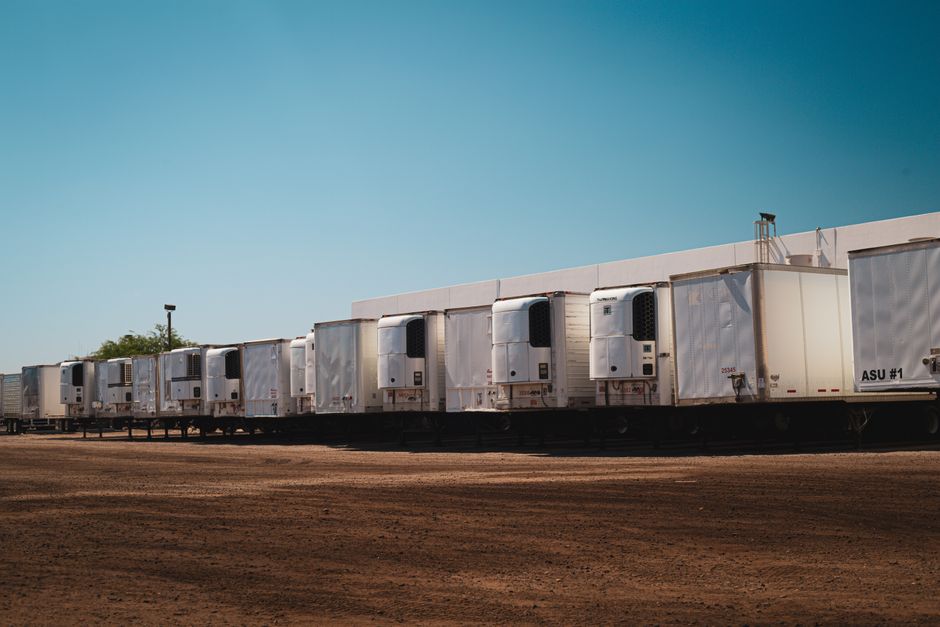
Two packages traveling the same 1,200 miles can produce wildly different tracking pages, and it’s a function of network design rather than one carrier being sloppier than another.
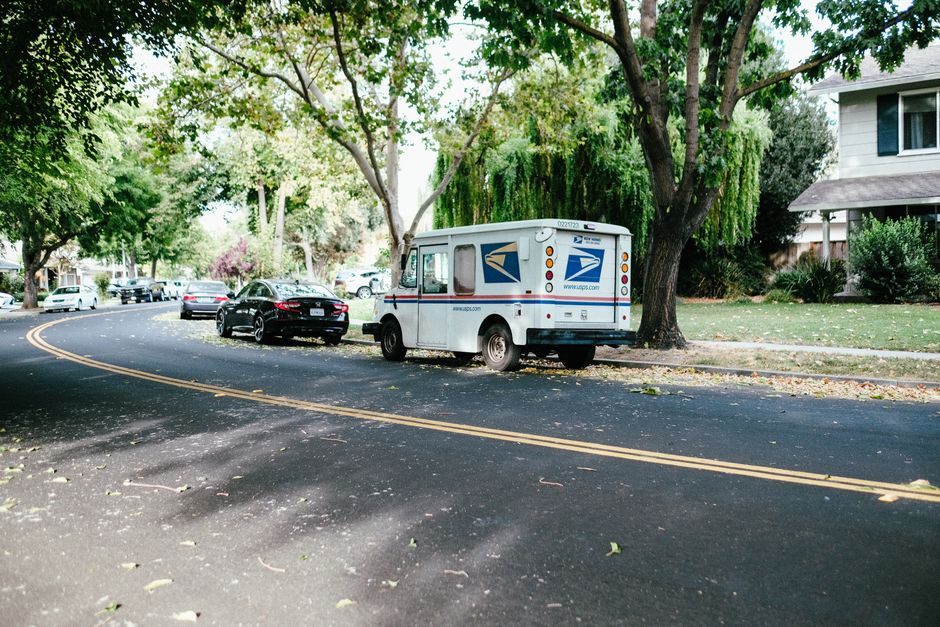
USPS runs a hybrid network. Its facilities are linked by a mix of its own vehicles and contracted trucking: a US Postal Service Office of Inspector General audit described a surface network built on roughly 11,800 Postal Vehicle Service routes and about 12,500 Highway Contract Routes connecting hundreds of processing facilities to roughly 35,000 post offices. Contracted legs and small rural offices have fewer automated scan points than a purpose-built air hub does.
UPS and FedEx run their own integrated hub-and-spoke networks with heavy automation at each hub, which generally produces more frequent and more granular events. Their tradeoff shows up elsewhere: economy ground products can still go quiet for long stretches, and FedEx-focused guides note that ground and economy services can look dead between scans longer than customers expect.
| Factor | USPS | UPS | FedEx |
|---|---|---|---|
| Network type | Hybrid: own vehicles plus contracted highway routes | Owned integrated air and ground hub-and-spoke | Owned networks, Express and Ground historically run separately |
| Typical scan frequency | Moderate; sparser on rural and contracted legs | High at hubs | High at hubs, sparser on economy ground |
| Common vague label | "In Transit to Next Facility" | "In Transit" / "Departed from Facility" | "In transit" / "On the way" |
| Last-mile handoffs | Handles other carriers’ final miles; also receives international mail | Own drivers, plus Access Point network | Own drivers; Home Delivery for residential |
| Where gaps get longest | International handoffs and contracted linehaul | Cross-country ground legs | Economy ground legs |
The messiest case is a handoff between networks. International shipments transferring from a foreign postal operator to USPS, or a retailer’s regional carrier passing a parcel to the post office for the final mile, effectively restart tracking in a second system. Parcel-tracking services list these transfers and customs steps among the most common causes of long tracking silences.
Why a package stalls in transit

Most stalls fall into six categories, roughly in order of how often they happen:
- Missort at a hub. The parcel went down the wrong chute and is now heading toward the wrong region. It will be caught at the next sort and re-routed, which costs a day or more.
- Transportation delay on a linehaul leg. Weather, a mechanical failure, or a trip that simply didn’t run. USPS’s own auditors documented hundreds of thousands of scheduled highway contract route trips omitted across fiscal years 2020 to 2022, with omissions rising sharply over that period. When a trip doesn’t run, the mail waits for the next one.
- Customs hold. International only. The package is physically sitting in a bonded facility awaiting inspection, duty assessment, or paperwork from the sender.
- Volume surge. Peak season sorting backlogs. The package is in the building, just not yet processed.
- Scan failure. A damaged or obscured label, or a parcel that bypassed a reader. The package moved; the record didn’t. This resolves itself at the next successful scan.
- Genuine loss or damage. The least common outcome, and the only one a claim can fix.
Notice that in four of those six cases, the correct action is to wait. That’s the frustrating part: from the outside, a missort, a scan failure, and a real loss look exactly the same on day two.
How many days of no movement is normal before you should worry

Start from the service standard, not from your own expectations. USPS lists Ground Advantage as expected in 2 to 5 business days, and its service standards page notes that expected delivery dates for most classes come without a money-back guarantee. Priority Mail is generally quoted at 1 to 3 business days. A ground package that is 24 hours past your mental deadline may not be late at all.
A decision rule you can apply to any carrier:
- Find the longest gap between two consecutive scans already in that shipment’s history.
- Add the remaining days in the service’s stated window.
- If current silence exceeds the sum of those two numbers, and the expected delivery date has passed, it’s worth an inquiry rather than more waiting.
For a Ground Advantage parcel with 18 hours between its last two scans and a 5-business-day window that expired yesterday, that puts you at roughly two days of extra silence before contacting anyone. For an overnight Express shipment, the same math gets you to a few hours.
The threshold for an official claim is stricter than the threshold for an inquiry, and the carriers define it themselves:
- USPS missing mail search: the USPS help page states that search requests can be submitted starting 7 days from mailing. Note the wording carefully. A number of third-party guides say 7 days after the expected delivery date, which is a different and later trigger than what USPS’s own page describes.
- USPS insurance claims: these are separate from a search and have their own waiting periods, commonly reported as 15 days from mailing for Priority Mail and Ground Advantage and 7 days for Priority Mail Express, with a hard 60-day outer deadline. Secondary sources disagree on the shorter figures, so verify against USPS’s claims page before filing; a claim submitted too early can be denied on timing alone.
- UPS: guides on the claims process describe a 24-hour buffer after the scheduled delivery date and time before a lost-package claim is accepted, with a 60-day window from scheduled delivery for domestic claims. UPS’s own tariff governs, and these figures vary by service, so treat them as a starting point.
- FedEx: the deadlines are explicit and asymmetric. FedEx states that claims for damage or missing contents must be filed within 60 calendar days for US packages and 21 for international, while claims for undelivered or lost shipments run to nine months from the shipment date.
International shipments follow a longer clock in every direction. A customs hold can add weeks legitimately, and the tracking data you see may be generated by a foreign operator that updates on its own schedule.
What to do when tracking looks stuck

Work through it in this order.
Check the service standard first. Half of "stuck" packages turn out to be inside their stated window once you count business days from the acceptance scan rather than calendar days from the order date.
Then contact the seller, not the carrier. The shipper holds the contract, has the account relationship, and in most cases is the only party who can open a formal trace or receive a claim payout. For a marketplace order, the platform’s own buyer protection process is usually faster than the carrier’s.
If you do go to the carrier, understand which process you’re starting. A trace or help request asks the carrier to physically look for the parcel; a claim asks for money and requires the shipment to be officially overdue by the carrier’s definition. It’s a distinction similar to the real difference between an inspection and an assessment — one gathers facts about the current state of things, the other renders a formal judgment with financial consequences attached.
Have the tracking number, the ship date, and proof of value ready before you start. Every carrier’s claim form asks for documentation of what was in the box and what it cost, and incomplete filings are a leading cause of denial.
Frequently asked questions
Does in transit mean it will arrive soon?
Not necessarily. "In transit" tells you the package is somewhere between the origin facility and the delivery vehicle, which could mean it’s on a plane 2,000 miles away or sitting in a sort facility 15 miles from your house. The status that actually predicts same-day arrival is "out for delivery." The estimated delivery date on the tracking page is a better signal than the status text.
Why did tracking show my package moving backward?
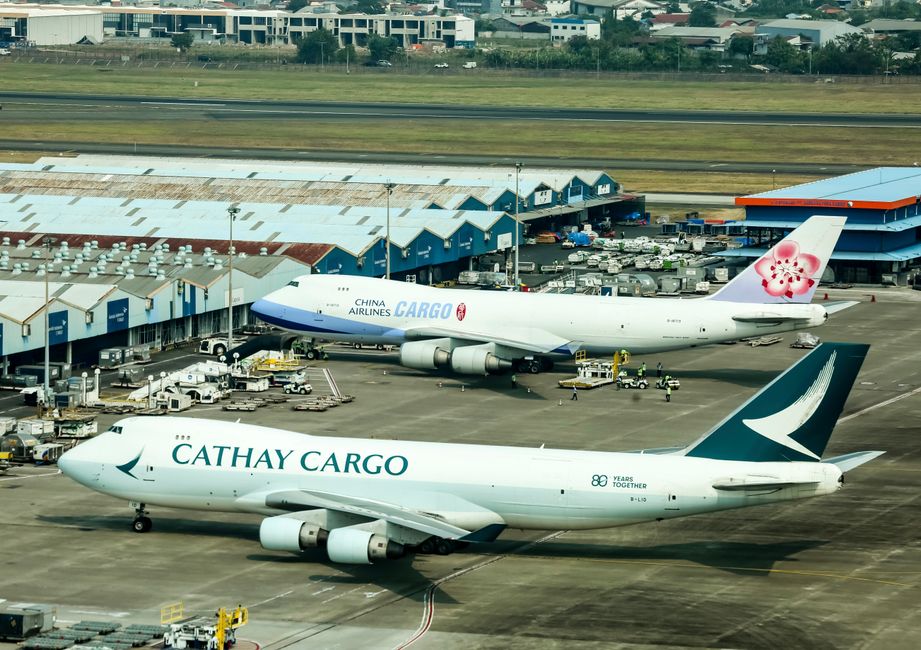
Usually a missort, occasionally normal routing. Hub-and-spoke networks sometimes send a parcel away from you to reach a hub that has the right outbound linehaul, so a package going from Denver to Phoenix might legitimately scan in Salt Lake City. If the same facility scans it twice, or it lands somewhere with no plausible route to you, that’s a missort being corrected. Either way, it adds days rather than meaning the package is lost.
One more thing worth knowing: a package can be marked in transit and still arrive on time, because carriers build slack into their published windows. The date to watch is the expected delivery date, and the moment to act is when that date passes and the silence exceeds the shipment’s own established scan rhythm. Everything before that is just the gap between physics and barcodes.