There is no fixed per-stream rate. Each platform pools its subscription and advertising revenue for the month, keeps its cut, and splits the rest among rights holders according to each one’s share of total streams. Divide the pool by total streams afterward and you get an average, not a payment rule, which is why "cents per stream" figures move constantly.
That distinction matters more than it sounds. It explains why two artists with identical stream counts can be paid different amounts, why the same song earns less in December than in June, and why every published per-stream number should be read as a backward-looking estimate rather than a rate card.
Why there’s no fixed rate per stream

Streaming services do not sell individual songs, so there is no unit price to pay out on. A subscriber pays a flat monthly fee, listens somewhere between 4 and 400 times that month, and the service has to turn that single payment into thousands of tiny allocations.
Spotify states the mechanism plainly in its Royalties Guide: royalties are calculated on streamshare, meaning a rights holder’s share of overall streams, not a fixed per-stream rate. The same page notes that if an artist accounts for 1% of all streams in a particular country, their chosen rights holders receive 1% of the recording royalties paid in that country. Roughly two-thirds of Spotify’s music revenue from subscriptions and advertising is allocated to recording and publishing royalties, with around four-fifths of that going to recording and one-fifth to publishing.
This is the pro-rata model, sometimes called the "big pool" model, and it is the industry default. The pool is not one global bucket either. It is typically calculated market by market, which is why the country your listeners live in changes what your streams are worth.
One consequence trips up new artists constantly: money not paid to one track is paid to everyone else. Since April 2024, Spotify’s track monetization eligibility policy requires a track to reach at least 1,000 streams in the previous 12 months before it is included in the recorded music royalty pool calculation, with an undisclosed minimum number of unique listeners on top of that to stop people gaming the threshold.
The pro-rata pool math, step by step

The four numbers that determine a payout

Only four inputs decide what a recording earns on a given platform in a given month:
- Net revenue for the month. Gross subscription and ad revenue minus sales taxes, payment processing, and similar costs.
- The rights holder allocation. The share of that net revenue paid out rather than retained by the platform.
- Total streams on the platform that month. The denominator, and the number nobody outside the company can see precisely.
- Your stream count. The numerator.
Numbers 3 and 4 give you streamshare. Multiply streamshare by the royalty pool and you have the payout before anyone in the chain takes a cut. Notice what is absent: no per-play price appears anywhere in the calculation.
A worked example with real math

Take a simplified platform with a recording royalty pool of $100 million for the month and 50 billion total streams. One artist gets 500,000 streams.
| Step | Calculation | Result |
|---|---|---|
| Streamshare | 500,000 / 50,000,000,000 | 0.00001, or 0.001% |
| Gross payout | $100,000,000 x 0.00001 | $1,000 |
| Implied per-stream average | $1,000 / 500,000 | $0.0020 |
Now hold the artist’s 500,000 streams completely constant and change only the platform’s total listening volume. Say total streams rise to 60 billion because it is summer, a viral track is everywhere, and average session length is up. Streamshare falls to 0.000833%, the payout falls to about $833, and the implied per-stream average drops to roughly $0.00167. The artist did nothing differently and earned 17% less.
Run it the other way. Keep 50 billion streams but grow the pool to $110 million after a price increase and a strong quarter for advertising. The payout rises to $1,100, or $0.0022 per stream.
That is the whole mechanism. Your payout is a fraction of a pool, and both the pool and the denominator move every month. This same logic of dividing a moving total across a changing base shows up in other everyday calculations, and worked-example math like this also applies to credit card interest, where the rate you feel is an output of a formula rather than an input to it.
Why per-stream estimates vary so much between reports

Published per-stream figures are reverse-engineered. Royalty Exchange makes the point explicitly in its 2026 breakdown of platform payouts, noting that most platforms do not publish official per-stream rates and that the numbers circulating online are estimates calculated from what artists were actually paid, drawn from distributor data.
Four things move those estimates around:
- Subscriber mix. Premium streams carry far more revenue than ad-supported ones. Royalty Exchange’s figures put premium subscriber streams at roughly two-and-a-half to three times the value of ad-supported streams. A platform with no free tier will always show a higher blended average.
- Geography and pricing. Subscription prices differ enormously by country, and pools are calculated per market. A play from a listener in a high-priced market is worth several times one from a low-priced market on the same service.
- Exchange rates and timing. Royalties reported in local currency get converted, and reporting lags mean a given month’s statement may reflect an older rate.
- What is being counted. Some published figures cover only the master recording royalty. Others blend in publishing income, which is collected separately and by different organizations.
When two articles quote $0.003 and $0.005 for the same service, they are usually both right about different samples of artists.
Estimated per-stream ranges by platform
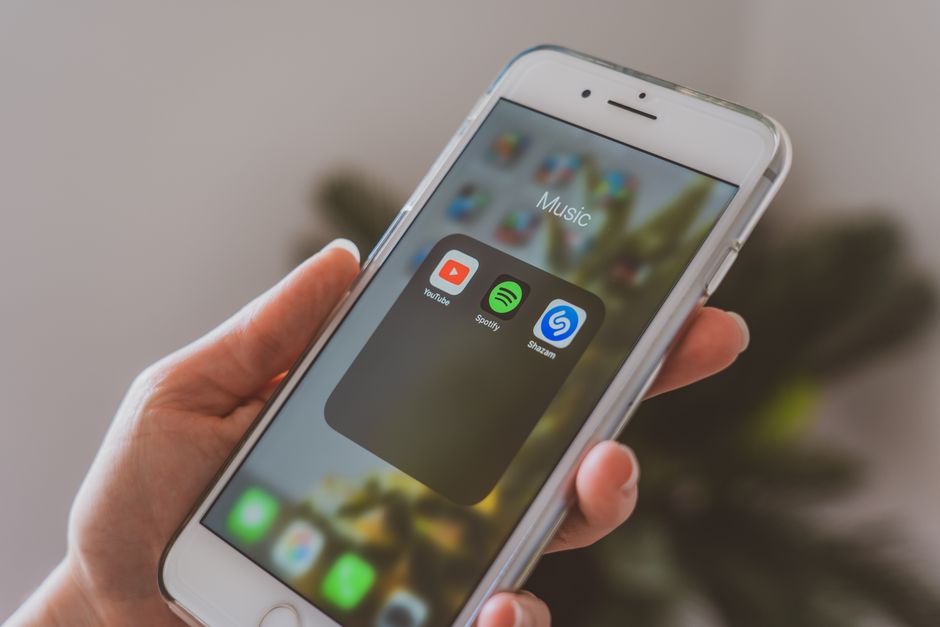
The table below uses the ranges published by Royalty Exchange in 2026, which reports Qobuz at roughly $0.015 to $0.019 per stream based on its own audited figure, Apple Music at $0.007 to $0.01, and Spotify at $0.003 to $0.005.
| Platform | Estimated per-stream range (2026) | Why it lands there | The pooling caveat |
|---|---|---|---|
| Qobuz | $0.015 – $0.019 | Subscription-only, high-priced tiers, comparatively small and engaged subscriber base | Still a pool divided by streams; a smaller denominator inflates the average without necessarily producing a bigger check |
| Apple Music | $0.007 – $0.01 | Subscription-only with no meaningful ad-supported tier, so the blended average is not dragged down by free listening | An average across all of Apple’s markets; your own figure depends on where your listeners are |
| Spotify | $0.003 – $0.005 | Huge audience including a large free tier, plus low-priced emerging markets in the mix | Streamshare-based by country and tier; the "rate" is an output, never a quoted price |
Read the third column before the second. A higher per-stream average on a service with one-fortieth of the audience does not mean more money. Royalty Exchange’s own framing is that total streams matter more than the per-stream rate, using the comparison that a million Spotify streams pay more than 50,000 streams on a higher-rate service.
Where the money goes before it reaches the artist
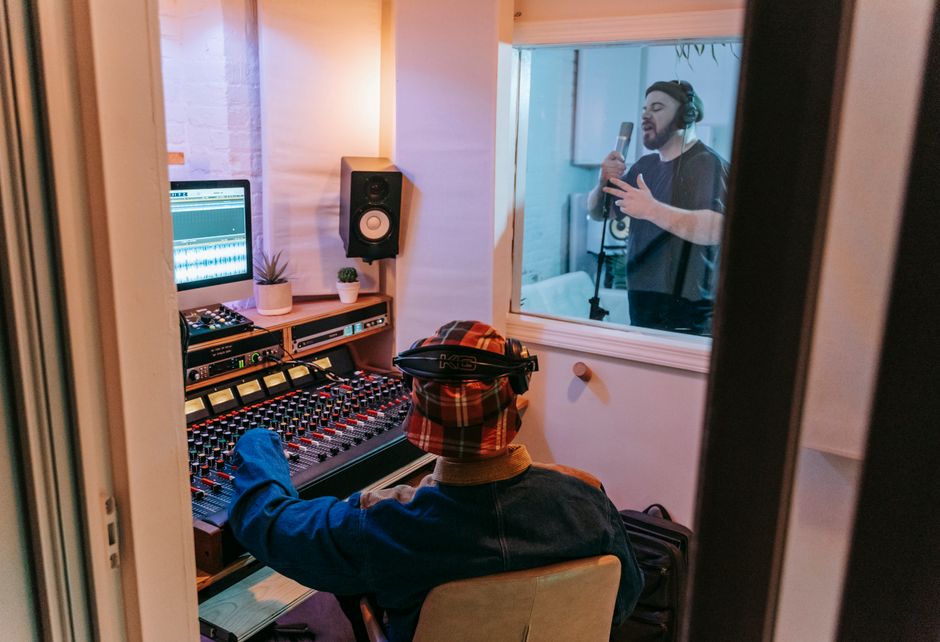
The number the platform calculates is not the number that lands in a bank account. Spotify’s royalties guide describes money moving from the service through labels, distributors, publishers, and collective management organizations before it reaches artists and songwriters, with commissions to managers and collaborators handled separately on top of that.
For the master recording, the chain depends on who owns it. A signed artist’s recording royalty goes to the label, which applies the contract split and usually recoups advances and costs first. An independent artist who owns the master receives it through a distributor. Among the major independent distributors, the commission structures differ sharply: Ari’s Take’s distribution comparison notes that CD Baby charges a 9% commission while DistroKid takes no commission and passes along 100% of royalties, charging an annual fee instead. The similar contract-splitting logic applies to warranties and service contracts, where who pays whom is set by the agreement rather than by the underlying product.
The composition is a separate income stream entirely. In the United States, streaming mechanicals flow through The Mechanical Licensing Collective, which administers the blanket mechanical license created by the Music Modernization Act, collects from digital services, and distributes to self-administered songwriters, publishers, and other collective management organizations on a monthly basis. Performance royalties on the same plays are collected by a performing rights organization such as ASCAP, BMI, SESAC, or GMR.
The rate on that composition side is set by regulation, not negotiation. Royalty Exchange’s comparison of mechanical and performance royalties describes an all-in headline rate under the Copyright Royalty Board’s Phonorecords IV framework of 15.3% of service revenue in 2026, rising to 15.35% in 2027, with performance royalties subtracted from that all-in figure to arrive at the mechanical payout.
The practical upshot: an artist who wrote and owns their own song collects from two different pools, through two different systems, on separate schedules. Registering with a distributor alone leaves the composition side uncollected.
Frequently asked questions

How much does Spotify pay per stream on average? Published estimates cluster around $0.003 to $0.005, but Spotify does not set or publish a rate. The figure is derived after the fact by dividing payouts by streams, so it shifts with subscriber mix, market pricing, and total listening volume.
Do independent artists get paid more per stream than signed artists? Not from the platform. The pool math is identical. What differs is how much survives the chain afterward: a distributor taking 0% or 9% leaves far more than a traditional record deal where the label collects first and recoups its costs before the artist sees anything.
How often are streaming royalties paid? Platforms report and pay monthly to labels and distributors, who then pay out on their own schedules. Expect a lag of one to three months between the stream and the deposit, depending on who sits in the middle.
Does a skipped song still count? Only if the play passes the minimum duration the service uses to register a stream, commonly 30 seconds. A skip before that threshold generates nothing, which is one reason completion rate affects real income and not just playlist algorithms.
Why do international streams often pay less? Because pools are built from revenue collected in each market. A subscription that costs a few dollars a month funds a smaller pool per listener than one costing $12, and that difference passes straight through to streamshare payouts.
If you want a usable rule: treat per-stream figures as planning benchmarks with an error bar of roughly plus or minus 40%, and track your own effective rate from your distributor statements over three months. That personal number, recalculated each quarter, is the only per-stream rate that actually describes your catalog.