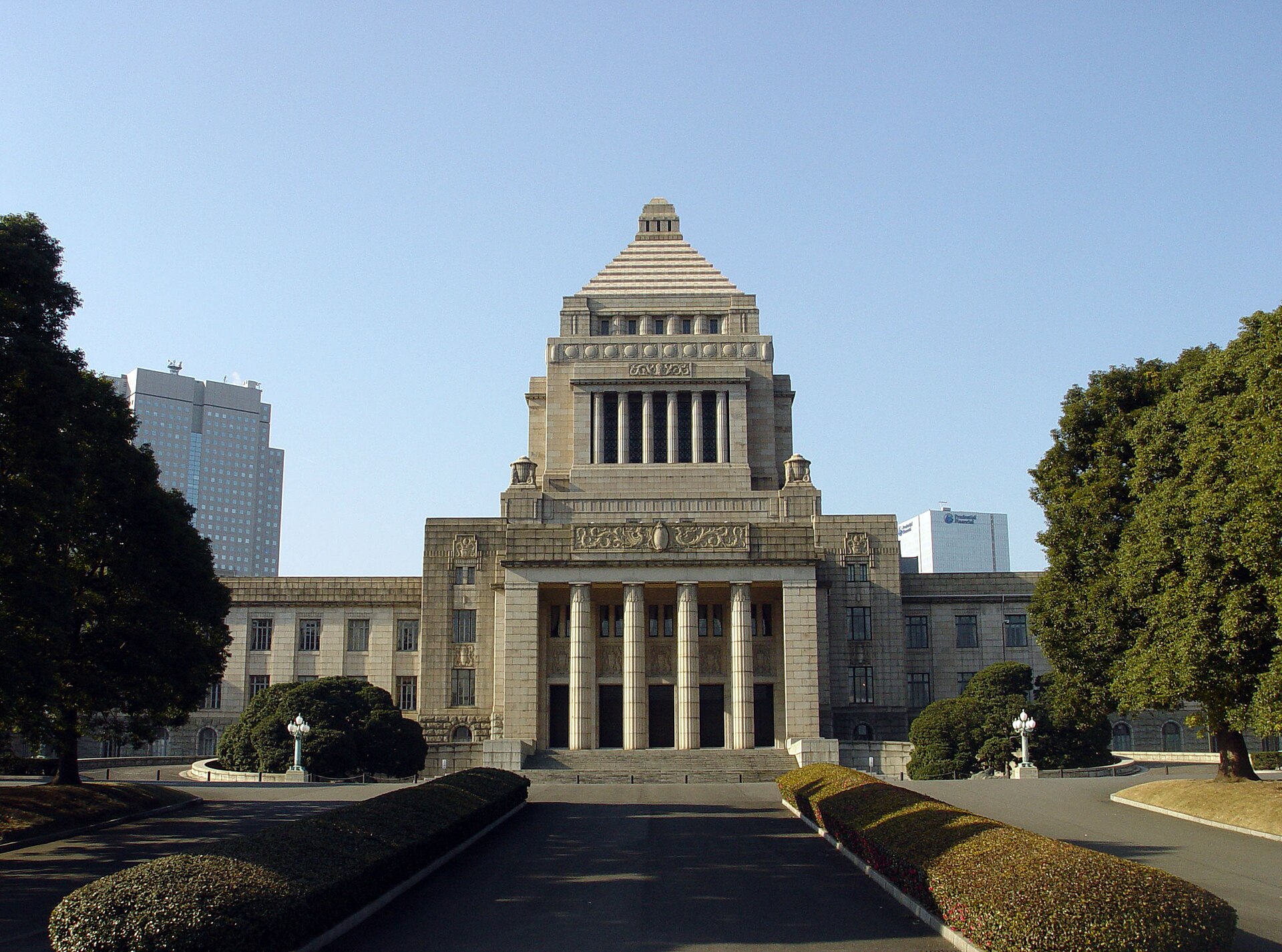
This is an English-language adaptation of a Japanese article originally published at seijinochikara.com. It explains Japanese institutions and terminology for international readers.
The Short Answer
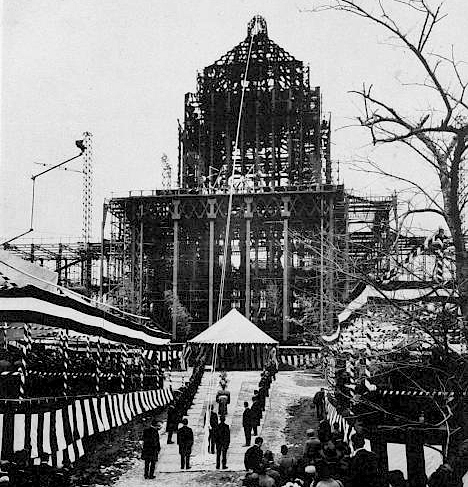
A cabinet no-confidence motion (naikaku fushinnin ketsugi in Japanese) is a formal declaration by Japan’s lower house of parliament — the House of Representatives (Shūgiin) — that the cabinet, meaning the prime minister and all ministers of state, no longer commands the legislature’s confidence and should not continue governing.
The constitutional basis is Article 69 of the Constitution of Japan, which states that if the House of Representatives passes a no-confidence motion (or rejects a confidence motion), the cabinet must either dissolve the lower house within ten days or resign en masse.
In plain terms, if the motion passes, the prime minister faces two options:
- Dissolve the House of Representatives and call a general election, allowing voters to decide which direction the country takes.
- Resign collectively — the entire cabinet steps down, and parliament elects a new prime minister.
The choice belongs to the cabinet — in practice, to the prime minister. Either way, the political stakes are enormous. Since the end of World War II, a no-confidence motion has passed the lower house only four times, making each occasion a landmark political event.
How the System Works

Constitutional and legal foundations
Japan’s system of government is a parliamentary cabinet system (giin naikakusei), meaning the executive branch must maintain the confidence of the elected legislature to remain in office. Article 69 of the Constitution provides the direct trigger for removing a cabinet, while Article 66, Paragraph 3 establishes the overarching principle that the cabinet is collectively responsible to the National Diet (Japan’s bicameral parliament). Procedural details are set out in Articles 128 to 132 of the Diet Law (Kokkai-hō).
Step-by-step procedure
- Introduction: Any group of 51 or more lower-house members may submit a no-confidence motion (Diet Law, Article 53).
- Plenary vote: Under Diet Law Article 132, a full sitting of the House of Representatives votes on the motion, normally within 48 hours of submission.
- Passage threshold: A simple majority of members present is sufficient for the motion to pass.
- Cabinet decision: Within ten days of passage, the cabinet must choose between dissolving the lower house or resigning.
- If dissolution: A general election must be held within 40 days, and a special session of the Diet must be convened within 30 days after that (Constitution, Article 54).
- If resignation: The Diet elects a new prime minister under Constitution Article 67, with the lower house’s choice prevailing in the event of disagreement between the two chambers.
The four times it has passed since 1945
| Year | Cabinet | Outcome | What followed |
|---|---|---|---|
| 1948 | Hitoshi Ashida | Passed | Cabinet resigned en masse |
| 1953 | Shigeru Yoshida | Passed | Lower house dissolved (the so-called “Bakayarō Dissolution,” named after a remark Prime Minister Yoshida made in parliament) |
| 1980 | Masayoshi Ōhira | Passed | Lower house dissolved (the “Happenstance Dissolution,” because many ruling-party members inadvertently helped the motion pass by absenting themselves) |
| 1993 | Kiichi Miyazawa | Passed | Lower house dissolved; subsequent election ended the Liberal Democratic Party’s unbroken dominance since 1955 and brought in a coalition government under Morihiro Hosokawa |
The 1993 case is the most consequential in modern Japanese political history. Thirty-nine LDP members voted in favour of the motion — a significant internal rebellion — triggering the collapse of what scholars call the “1955 System” (gojūgonen taisei), the era of near-continuous one-party LDP rule that had lasted nearly four decades. Transcripts of those Diet proceedings are available through the National Diet Library’s parliamentary records search system.
Why It Matters
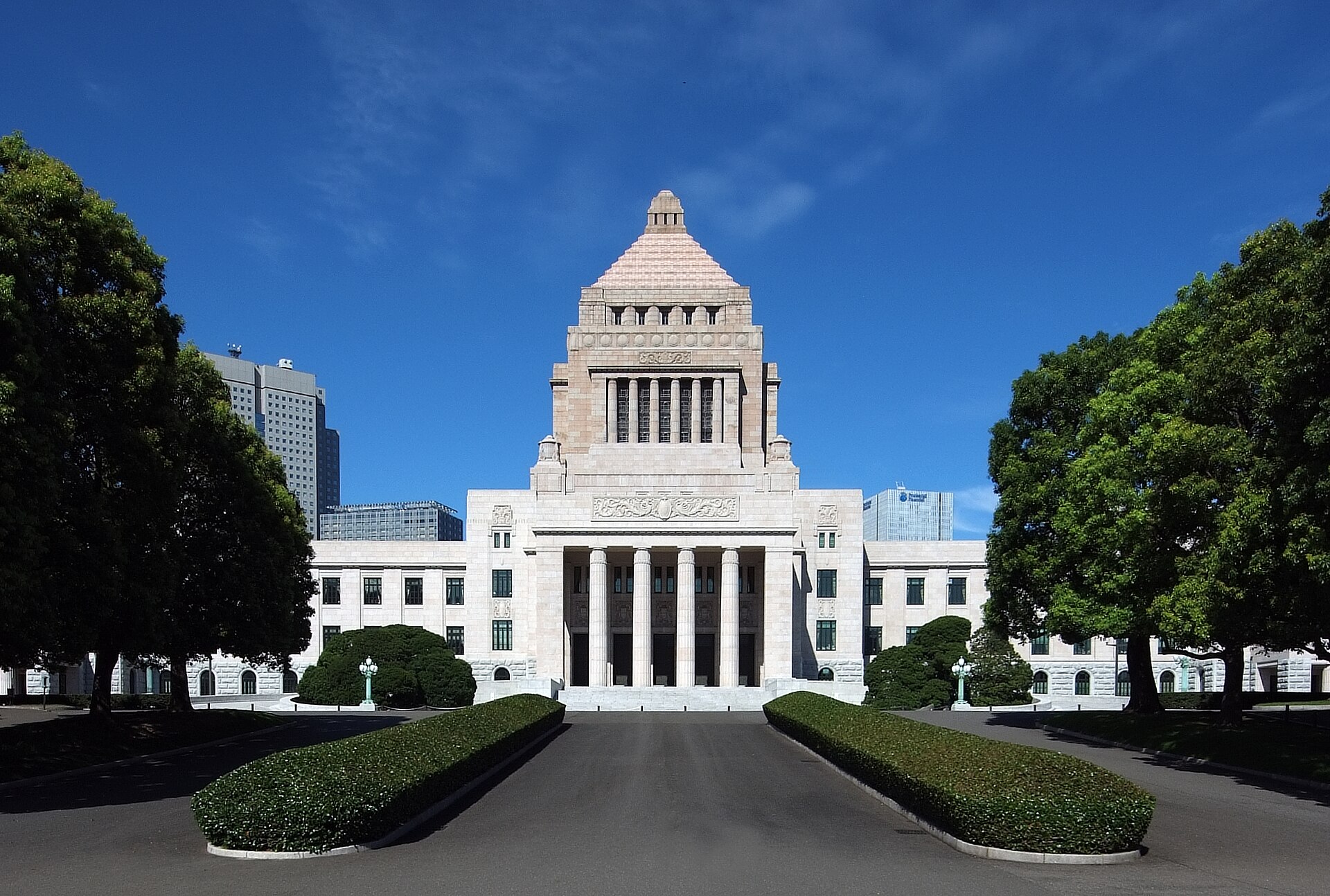
The no-confidence mechanism is often described as a democratic safety valve within a parliamentary system: it gives the legislature a formal, constitutional way to remove an executive that has lost political legitimacy, without waiting for a scheduled election.
For ordinary citizens, the practical consequences can be significant. If the cabinet chooses dissolution and a general election follows, every voter has a direct say in who governs. Social security payments, health insurance, and public services continue uninterrupted throughout an election campaign — the caretaker cabinet maintains routine administration — but major policy decisions are typically deferred until a new cabinet is formed. People who rely on long-term care, pension policy, or agricultural subsidies may find that contested reforms are put on hold.
Even when a motion is defeated — which is the normal outcome when the ruling party holds a majority — its submission sends a political signal. Opposition parties use it to highlight government failures, scandals, or unpopular legislation, and the debate itself receives national media coverage.
Arguments and Context
Comparison with the United Kingdom and Germany
Japan is not alone in giving its parliament the power to remove a cabinet, but the mechanics differ across parliamentary democracies.
In the United Kingdom, a government that loses a confidence vote in the House of Commons faces a 14-day period during which an alternative government may be formed before a dissolution is forced. The UK’s Fixed-term Parliaments Act 2011, which had constrained the prime minister’s power to call snap elections at will, was repealed and replaced in 2022, restoring broader prime ministerial discretion over election timing.
In Germany, the Basic Law establishes a konstruktives Misstrauensvotum — a constructive vote of no confidence. Parliament cannot remove a chancellor simply by declaring the incumbent unacceptable; it must simultaneously name a successor. This prevents a political vacuum caused by a coalition of otherwise incompatible opposition parties uniting only to topple the government. In 2024, Chancellor Olaf Scholz deliberately lost a confidence vote he himself called, triggering a dissolution and early election — a mechanism Germany’s constitution permits as a separate procedure from the constructive no-confidence vote. The source article notes that some voices in Japan have called for adopting a similar constructive model, though no such change has been enacted.
Common misconceptions
The source article identifies three widely held misunderstandings worth clarifying:
- “The upper house can also pass a no-confidence motion.” It cannot. Article 69 of the Constitution explicitly limits this power to the House of Representatives. The upper house, the House of Councillors (Sangiin), may pass a censure motion (monshō ketsugi) against the prime minister or individual ministers, but this carries no legal obligation to resign — it is a political statement only.
- “If the motion passes, the government changes immediately.” The cabinet has ten days to decide its course. If it chooses dissolution, the incumbent government continues in a caretaker capacity throughout the election campaign. A general election could even return the same party — and theoretically the same prime minister — to power. In 1980, after the Ōhira cabinet chose dissolution, the LDP won the subsequent election by a large margin (though Prime Minister Ōhira died during the campaign).
- “A motion cannot pass without defections from the ruling party.” In practice, this is true — if the ruling party holds a majority and votes as a bloc, the motion fails. But all four historical passages involved ruling-party defections. In 1993, the 39 LDP members who voted in favour were decisive. A comfortable majority is not a guarantee of unity.
What International Readers Should Know
Japan’s political structure in brief
Japan’s National Diet has two chambers. The lower house, the House of Representatives, is the more powerful: it has the final say on the budget, treaties, and the selection of prime minister when the two chambers disagree. A no-confidence motion is exclusively a lower-house instrument. The prime minister is elected by the Diet and leads the cabinet, which is collectively accountable to parliament — the core of the parliamentary cabinet system.
How citizens can engage
Japanese citizens do not have a direct mechanism to remove a cabinet between elections, but several avenues exist for civic participation. Voting in general elections — the franchise is available to all citizens aged 18 and over — is the most direct means of accountability. Citizens may also submit written petitions to their local lower-house member (a right guaranteed by Article 16 of the Constitution and governed by Diet Law Article 79), request that local assemblies pass resolutions addressed to the national government, and take part in lawful demonstrations or signature campaigns. Early voting and absentee voting procedures, which allow people who are travelling, hospitalised, or otherwise unable to reach their polling station on election day, are administered by the Ministry of Internal Affairs and Communications.
Key resources for following events as they unfold
The motion’s status — whether one has been submitted, the scheduled vote date, and the result — is posted on the official website of the House of Representatives. The Prime Minister’s Office website carries official cabinet announcements. The National Diet Library’s records system allows anyone to read the full text of past debates in the original Japanese.
Sources and Original Article
- Japanese source article: 内閣不信任決議とは 可決された場合に何が起きるか — seijinochikara.com
- House of Representatives (Shūgiin) official website — bill status, plenary schedules, and voting results: https://www.shugiin.go.jp/
- National Diet Library — Parliamentary Records Search System — full transcripts of all Diet proceedings, including past no-confidence debates: https://kokkai.ndl.go.jp/
- House of Councillors (Sangiin) official website — information on censure motions and upper-house proceedings: https://www.sangiin.go.jp/
- Prime Minister’s Office (Kantei) official website — official cabinet statements, dissolution announcements, and press releases: https://www.kantei.go.jp/
- Ministry of Internal Affairs and Communications — election schedules, early voting, and absentee voting procedures: https://www.soumu.go.jp/
Vetted official references: