State public utility commissions, not utility companies, approve electric rate increases. A utility files a "rate case" documenting its costs and the return it wants on its investments; commission staff, a state consumer advocate, and other intervenors pick the filing apart; commissioners vote after hearings. Most requests pass in some form, usually at a trimmed-down number, because the formula is built around recovering documented costs.
That last part is the piece almost no local news story explains. A rate hike is not a negotiation over what the company feels like charging. It is an arithmetic exercise with a fairly narrow set of disputed inputs, and once a utility has spent the money and the spending is judged prudent, the math tends to point one direction.
Who actually decides if your rate goes up
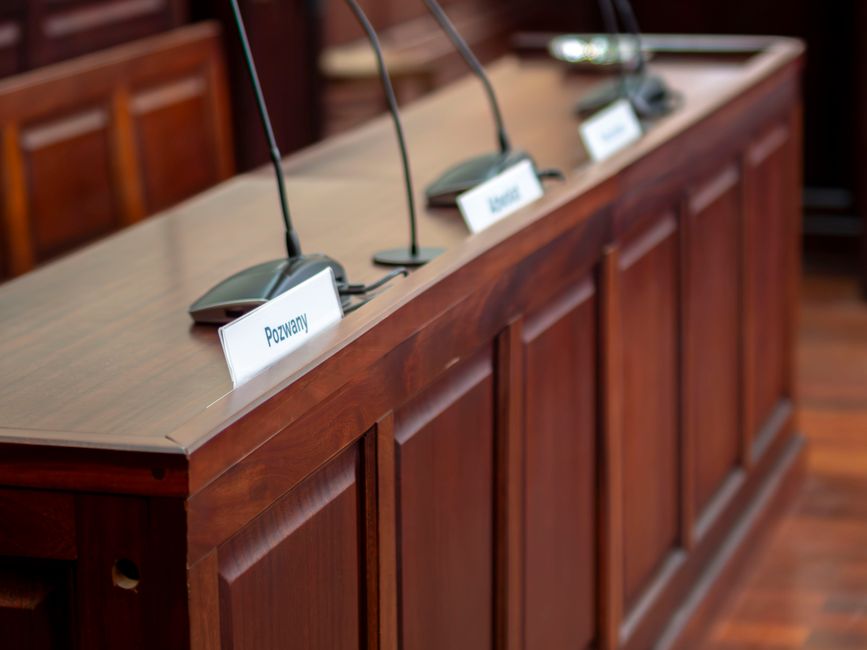
For investor-owned utilities, the decision belongs to a state public utility commission (PUC) or public service commission (PSC). Same institution, different name depending on the state. These are typically three- to seven-member bodies that act as quasi-judicial regulators over a legal monopoly: the utility gets an exclusive service territory, and in exchange the state sets its prices.
How those commissioners get their jobs varies, and the sources disagree on the exact count. Ballotpedia’s tally) puts it at 10 states electing commissioners and 40 appointing them, with governors holding the appointment power everywhere except Virginia and South Carolina, where the legislature chooses. NARUC’s own materials have described 11 elected states in one publication and 14 in another, so treat any single number as approximate and check your state directly. The practical takeaway holds either way: in most of the country you cannot vote a commissioner out over a rate decision.
Not every utility answers to a PUC. Municipal utilities and rural electric cooperatives generally set their own rates through a city council or an elected member board, skipping state review entirely. If your power comes from a city-owned utility or a co-op, the hearing you care about is at city hall or the co-op’s annual meeting, not the state commission.
Then there is the federal layer, which confuses people because it shows up on your bill without being on your bill. FERC regulates interstate transmission and wholesale power sales under the Federal Power Act, and does not regulate retail distribution or the price you pay per kilowatt-hour. Those FERC-approved transmission costs still flow through to you, because your state commission passes them into retail rates.
The formula regulators use to calculate a "fair" rate

Nearly every state builds rates from the same equation:
Revenue Requirement = Operating Expenses + (Rate Base x Allowed Rate of Return)
Operating expenses are the recurring costs: fuel, labor, maintenance, tree trimming, taxes, depreciation. Rate base is the accumulated capital the utility has sunk into used-and-useful plant, poles, wires, substations, generating stations, and meters, minus accumulated depreciation. The allowed rate of return is a weighted blend of the utility’s cost of debt and its authorized return on equity (ROE), the profit margin shareholders are permitted to earn.
Put numbers on it. A utility with $800 million in annual operating expenses, a $5 billion rate base, and a 7 percent weighted allowed return needs $800 million plus $350 million, or $1.15 billion in revenue. Divide that across forecast sales and customer classes and you get the rates printed on your bill. Shave the allowed return to 6.5 percent and the requirement drops by $25 million. That is why the cost-of-capital fight consumes so much of a rate case.
Authorized ROE has been remarkably stable. Regulatory Research Associates data filed in a Utah PSC docket put the average authorized electric ROE at 9.66 percent for full-year 2023 and 9.68 percent for the first half of 2024, excluding rider cases. California’s commission set 2026 costs of common equity for its four largest energy utilities in the high 9s to just over 10 percent, below what the utilities asked for.
The structural consequence is the one ratepayers should understand: profit is tied to rate base, not to volume sold. A utility earns its return by having capital invested, which is why grid spending programs and rate increases travel together. The same distinction between what an asset cost, what it is worth today, and what it earns runs through other valuation fights, including how appraisals and assessments differ from inspections.
The rate case process, step by step

A general rate case runs on a schedule set by the commission, and the sequence is fairly uniform across states. Wisconsin’s commission publishes a plain-language walkthrough of how rates get changed that tracks the national pattern closely.
- The utility files. The application includes a test year of projected or historical costs, the proposed rate base, a requested ROE backed by expert testimony, and the rate design showing how the increase splits across residential, commercial, and industrial customers.
- Staff audit and discovery. Commission staff audit the books and build their own independent revenue requirement, which is almost always lower. Intervenors, the state consumer advocate, large industrial customers, environmental groups, and senior advocacy organizations, submit data requests and file competing testimony.
- Hearings and public comment. There is a technical evidentiary hearing where witnesses are cross-examined, plus public comment sessions. Wisconsin’s September 2026 We Energies hearings, for example, were held in person with a Zoom option and a written comment window that closed weeks later.
- Settlement. Most cases never reach a fully litigated decision. Parties negotiate a stipulated revenue requirement, often with a "black box" number that does not specify an ROE. In Wisconsin’s 2025 cases, Alliant and Madison Gas and Electric both reached settlements with all parties that reduced the size of the proposed increases.
- Commission vote and final order. Commissioners vote in an open meeting, issue a written order setting the approved revenue requirement, and the utility files compliance tariffs with the new rates.
Timelines run roughly 6 to 12 months for a full electric rate case, though statutes vary; some states impose hard deadlines and others let complex cases stretch past a year. If the structure feels familiar, it should. It follows the same logic as how a regulatory approval process moves through formal review stages: a documented application, technical review by agency staff, an adversarial record, then a decision by appointed officials on a defined schedule.
Why most rate hike requests get approved
The honest framing is not "are increases approved" but "how much of the ask survives." EIA’s September 2024 analysis of the S&P Capital IQ rate case database found state regulators signed off on $9.7 billion in net rate increases during 2023, more than double the $4.4 billion authorized in 2022. That net figure reflected $10.3 billion in authorized increases against just $0.6 billion in decreases.
The approval-rate number in that same analysis is the one worth remembering: from the start of 2023 through August 12, 2024, regulators nationwide authorized 58 percent of the net increases utilities requested. Note carefully what that measures. It is the share of requested dollars granted, not the share of cases approved. Outright denial of an entire filing is rare; partial approval is the norm.
Three things explain the pattern. Utilities have a legal right to a reasonable opportunity to recover prudently incurred costs and earn a fair return, so a commission that rejected documented, already-spent capital would likely be reversed on appeal. Utilities also self-select, filing only for costs their lawyers believe are defensible on the record. And the biggest driver of current filings is capital that has already been poured into the ground: grid hardening, storm restoration, transmission buildout, and wildfire mitigation. EIA noted that more than a third of 2023’s net increase went to two California utilities working to make their grids less vulnerable to wildfire.
How to have input on a rate case in your state

Every general rate case has a public comment period open to any ratepayer, by written comment, online form, or testimony at a public input hearing. Comments do not require a lawyer and are not limited to legal arguments; hardship testimony from residential customers becomes part of the evidentiary record commissioners review.
The more effective lever is usually your state’s consumer advocate. NASUCA is an association of 44 consumer advocates across 40 states and the District of Columbia, each designated by state law to represent utility consumers before regulators and in court. These offices, Ohio’s Consumers’ Counsel, California’s Public Advocates Office, and their counterparts, employ accountants and rate-of-return experts who challenge the utility’s cost of capital line by line, at no cost to you. Contacting them with specific documentation is generally more useful than a comment saying rates are too high.
To find what is pending, search your state commission’s website for its docket or case lookup and locate the utility’s filing by case number. NARUC’s FAQ page explains how commissions take customer input during rate proceedings. Be realistic about the ceiling: individual comments rarely move a revenue requirement on their own. Volume and organized intervention do, and settlements are where the number actually gets reduced.
Frequently asked questions

Does an approved increase hit my bill right away? Sometimes, but multi-year phase-ins are common. Wisconsin’s 2024 We Energies decision, for instance, set a residential increase beginning January 1, 2025 followed by a second step a year later, with both steps approved in the same order.
Can an approved rate increase be appealed? Yes. Parties to the case, including most state consumer advocates, can seek rehearing at the commission and then appeal to state court. Courts generally review whether the order was supported by substantial evidence and followed the statute, not whether the rate was the best possible one, so reversals are uncommon.
Why do neighboring states pay such different rates? Fuel mix, distance to load, storm and wildfire exposure, whether the state restructured its market, and how much capital the local utility has recently put into service. Two states with similar wholesale power costs can diverge sharply once distribution investment and state policy costs are layered on.
Is my bill up because of usage or because of rates? Compare kilowatt-hours, not dollars, on 12 months of bills. If your kWh are flat and the bill is up, the change is in rates or riders. If kWh moved, weather and new appliances are doing the work.
One practical rule: if you want to influence what you pay, the moment to act is when the capital plan is proposed, not when the rate case is filed. By the time a utility asks to recover a $2 billion investment, the money is spent and the commission’s realistic options are timing and return, not whether the spending happens at all.