An adjuster inspects the damage, documents it, matches it against the perils and limits in your policy, then calculates a payout: either the full cost to replace what was damaged, or that cost minus depreciation, depending on how your policy settles losses. Most straightforward home insurance claims resolve in 30 to 60 days. Large or disputed ones can run months.
The part almost nobody explains clearly is the arithmetic in the middle. Below is the actual math an adjuster runs, with dollar figures, plus a stage-by-stage timeline keyed to real state deadlines.
What happens right after you file a claim

The first call is called the first notice of loss. The insurer collects the date of the loss, what caused it, a rough description of what was damaged, your policy number, and whether the home is still livable. That information gets turned into a claim number, which is the reference you will use for every piece of correspondence that follows.
Before anyone visits, a coverage analyst or the adjuster reviews your declarations page: which perils are covered, what your dwelling and personal property limits are, and which deductible applies. Wind and hail often carry a separate, percentage-based deductible that is much larger than the flat dollar deductible for everything else, and that single detail can change the payout more than anything the adjuster does at the house.
Three kinds of adjusters can show up. A staff adjuster is an employee of your insurer. An independent adjuster is a contractor the insurer hires, common after hailstorms and hurricanes when claim volume spikes. A public adjuster works for you, for a fee, and is the only one of the three whose paycheck does not come from the carrier.
You also have a duty to mitigate. Every standard policy obligates you to take reasonable steps to prevent further damage: tarping a roof, shutting off a water supply line, boarding a broken window. Keep those receipts. Reasonable mitigation costs are generally reimbursable, and skipping mitigation gives the insurer an argument that part of the damage was avoidable.
How the adjuster inspects and documents the damage
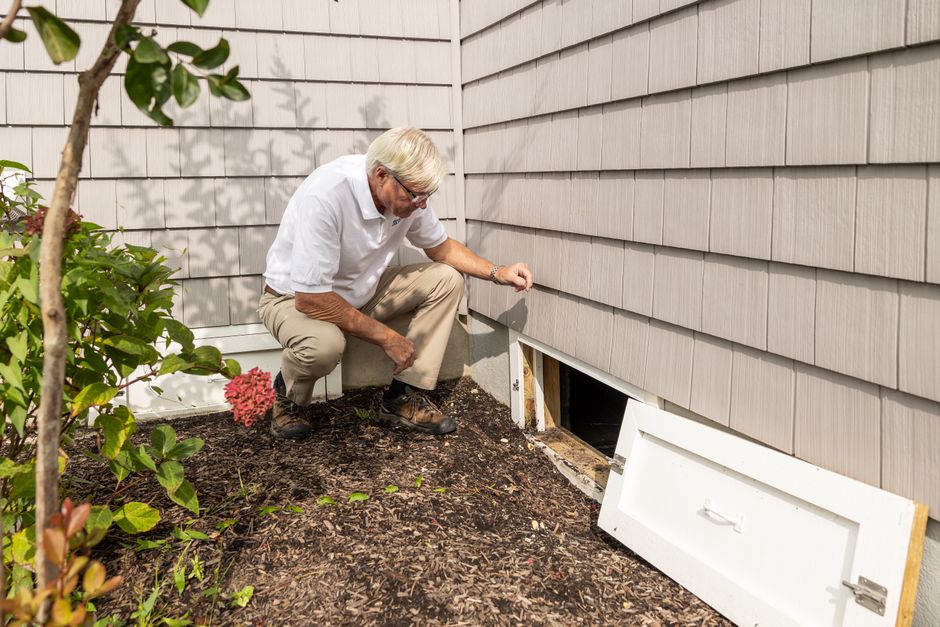
The site visit is a measuring exercise, not a negotiation. The adjuster photographs each damaged area, measures rooms and roof slopes, counts hail strikes per test square on a roof, notes the age and condition of building materials, and asks for receipts or an inventory for damaged contents. Anything not photographed is hard to argue about later, which is why your own photo set matters.
Next comes the coverage match. Damage has to trace back to a peril the policy covers, and it has to survive the exclusions. Wind-driven rain through a storm-opened roof is usually covered; long-term seepage, wear, and most surface flooding are usually not. A single water loss can split into a covered portion and an excluded portion, and that split is where a lot of disputes start.
The dollar estimate is normally built in estimating software such as Xactimate, which prices line items by trade using regional labor and material costs that update periodically. That is why an adjuster’s number and a contractor’s number can both be honest and still differ: the contractor is quoting their actual price, the software is quoting a regional average for a defined scope of work.
A second inspection happens more often than people expect, usually when your contractor finds hidden damage behind drywall, or when the claim grows past the first adjuster’s authority limit and a reinspector or engineer is assigned. If you are also sorting out a property valuation at the same time, note that the difference between an appraisal and an inspection is not academic here. Insurance appraisal is a dispute process, not a property walkthrough.
How the payout number actually gets calculated

Once the scope is set, the estimate total is the starting number. What happens to it next depends entirely on one line in your declarations page.
Actual cash value vs. replacement cost value

Replacement cost value (RCV) is what it costs today to repair or replace with materials of similar kind and quality, with no deduction for age. Actual cash value (ACV) is that same figure minus depreciation. The Texas Department of Insurance defines ACV as replacement cost minus depreciation, where depreciation is simply the decrease in value from wear and age.
Here is the mechanism most homeowners miss. A replacement cost policy does not hand you the full RCV up front. <cite index="37-10,37-11,37-12,37-15,37-16">TDI’s guide describes the standard pattern: most companies pay with two checks, the first for the estimated cost of repairs minus depreciation and your deductible, and the second for the withheld depreciation after the company receives the bill for the finished job, usually within a set time limit.</cite> That second amount is the recoverable depreciation. On an ACV policy, there is no second check. The depreciation stays with the insurer.
Worked example: depreciation math on a damaged roof
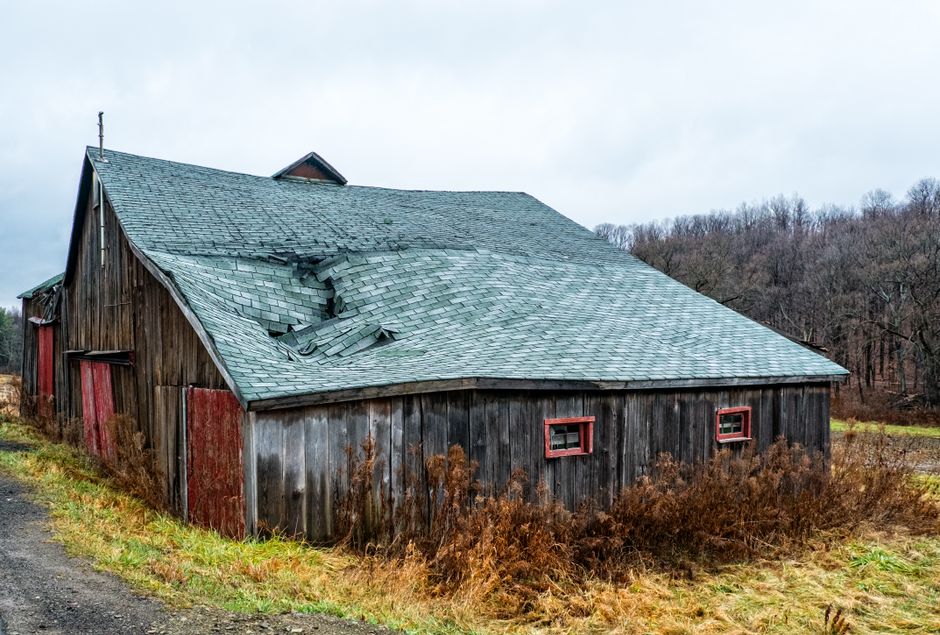
Take a 15-year-old asphalt shingle roof on a carrier schedule that assigns it a 20-year useful life. Replacement cost from the estimate is $12,000. The deductible is $1,000.
| Step | Calculation | Amount |
|---|---|---|
| Replacement cost value (RCV) | Estimate total | $12,000 |
| Depreciation rate | 15 years used / 20-year life | 75% |
| Depreciation withheld | 75% x $12,000 | $9,000 |
| Actual cash value (ACV) | $12,000 – $9,000 | $3,000 |
| Deductible | Subtracted from first check | -$1,000 |
| First check | ACV minus deductible | $2,000 |
| Recoverable depreciation (RCV policy only) | Released after repairs, with invoices | $9,000 |
| Total on an RCV policy | $12,000 – $1,000 deductible | $11,000 |
| Total on an ACV policy | First check only | $2,000 |
Same roof, same storm, same adjuster, same estimate. The gap between $11,000 and $2,000 is one word on your declarations page.
Two things in that table trip people up. First, the deductible comes out of the first check, not spread across both, so the opening payment is often shockingly small. Second, the depreciation percentage is not negotiable in the abstract but the inputs are: roof age, assumed useful life, and pre-loss condition are all judgments, and if the adjuster recorded the roof as older than it is, the whole chain of math shifts.
Deductible mechanics work the same across insurance lines, incidentally. If you have ever sorted out a vet bill reimbursement, pet insurance deductibles work the same way: the deductible is removed from the covered amount, not from your bill.
How long each stage of the claim typically takes
There is no federal deadline. <cite index="4-4,4-6,4-7">Most states set their own limits, with some requiring only a "reasonable" time, others giving insurers 10 to 30 days to acknowledge a claim and around 40 days to accept or deny it, and no federal law setting a payout timeframe at all</cite>, according to Insurance.com’s review of state claim rules.
| Stage | Typical elapsed time | Statutory anchor |
|---|---|---|
| Claim filed to acknowledgment | 1 to 15 days | Texas: 15 days to acknowledge, begin investigating, and request documents (Ins. Code 542.055). Florida: 7 calendar days to acknowledge |
| Acknowledgment to adjuster inspection | 3 to 14 days | Florida: inspection within 30 days of your proof-of-loss statement |
| Inspection to written estimate | 5 to 15 days | No fixed deadline in most states |
| Estimate to coverage decision | 15 to 60 days | Texas: 15 business days to accept or reject after receiving all information (542.056). Florida: 60 days to pay or deny |
| Decision to first payment | 5 to 20 days | Texas: 5 business days after acceptance (542.057) |
| Repairs to recoverable depreciation release | Weeks to months | Triggered by your invoices, not a clock |
The Texas figures come from the state’s Prompt Payment of Claims Act, and a breakdown of the Texas statutory stages lists each deadline against its code section. Florida’s are tighter at the front end and looser at the back: <cite index="8-6">the insurer must acknowledge within 7 calendar days, complete a physical inspection within 30 days of your proof-of-loss statement, and pay or deny within 60 days of notice</cite>, per an explanation of the Florida statutory timeline.
Add time for anything that breaks the normal pattern: a declared catastrophe (independent adjusters get hundreds of files at once, and some states extend deadlines during emergencies), a coverage question that goes to a desk examiner, an engineering inspection, or missing documentation on your side. Supplemental claims for hidden damage restart much of the cycle.
What can go wrong, and how to respond

Underpayment usually traces to one of four things: an excluded cause of loss, a scope that missed damage, an aggressive depreciation schedule, or a unit price in the estimating software that is below what local contractors actually charge. Outright denials are different in kind. A denial is a coverage decision, and it needs a coverage answer, not a pricing argument.
The cheapest first move is a reinspection. Send the adjuster your contractor’s itemized estimate alongside the carrier’s line-item estimate and flag the specific differences: missing trades, omitted code upgrades, square footage, labor minimums. Vague disagreement rarely moves anything. Line-item disagreement often does.
If the dispute is purely about money, most property policies contain an appraisal clause. <cite index="20-2,20-3">These provisions have been in insurance policies for more than a century and are designed to give a nonjudicial way to resolve disagreements over how much the insurer should pay</cite>, as IRMI’s analysis of homeowners appraisal clauses explains. <cite index="27-18,27-19,27-20">Each side picks an appraiser, the two appraisers choose an umpire, and an itemized decision agreed to by any two of the three sets the amount of loss</cite>, per the Insurance Appraisal and Umpire Association. <cite index="27-7">Appraisal does not address coverage issues</cite>, so it is the wrong tool for a flat denial. Also check your own policy: some carriers have narrowed or removed the clause in recent years.
A public adjuster is the other route, and the fee is the tradeoff. Caps are set by state. One state-by-state fee reference puts typical residential fees at 10% to 15% of the settlement, with Florida capping at 20% for standard claims and 10% during declared emergencies under Fla. Stat. 626.854, and New York limited to 12.5%. Sources disagree about Texas: some describe a 10% statutory cap under Insurance Code 4102.104, while others say there is no cap and market rates land in the 10% to 15% range. Your state insurance department’s licensing page is the authoritative answer, not a vendor’s site.
If the carrier misses statutory deadlines or stops responding, a complaint with your state insurance department is free and creates a regulatory record. And if the underlying problem turns out to be a defective product or bad workmanship rather than a covered peril, you may be looking at a different remedy entirely, since warranty, guarantee, and service contract differ in what each one actually obligates anyone to do.
Frequently asked questions

Can I use my own contractor? Yes. The policy obligates the insurer to pay for covered repairs, not to choose who performs them. Insurers often have preferred-contractor networks that come with a workmanship guarantee and faster scheduling, but using one is a convenience, not a condition of payment.
Will a weather claim raise my premium? Possibly, though less than other claim types. Experian’s summary of claim-type premium effects notes that <cite index="46-10">weather-related claims generally have the least effect on premiums, while fire-related claims have the biggest</cite>. Several states restrict surcharges or nonrenewal based on weather claims, and claims stay in the industry CLUE database for years, visible to any carrier you shop with later.
What if my contractor and the adjuster disagree on cost? Ask for a line-by-line comparison and identify where the two documents diverge. Most gaps are scope gaps, not price gaps. If the numbers still will not reconcile after a reinspection, that is precisely the dispute the appraisal clause exists to settle.
Is a public adjuster worth the fee? It depends on the size of the gap and the complexity of the loss. A 10% fee on a $200,000 fire claim is a different proposition than 15% on an $8,000 water loss where the carrier’s estimate is already close. The useful test: can you articulate specific line items the carrier missed? If yes, a reinspection may fix it for free. If the claim is large, partially denied, or involves contents inventories running into hundreds of items, professional help has more to work with.
A practical rule for the first week: photograph everything before you clean up, read the loss settlement section of your policy for the words "actual cash value" or "replacement cost," and write down which deductible applies. Those three facts determine most of the final number before the adjuster ever knocks. For anything involving a denial or a legal deadline in your state, a licensed attorney or your state insurance department is the right place to take it.