A liquor license gets approved or denied by one of three decision-makers, depending on the state: a numeric quota that mathematically caps how many licenses a town or county can hold, a local board that votes in open session after a public hearing, or a state examiner who signs off on routine applications without any hearing at all unless someone objects. Figuring out which of the three applies to your address tells you more about your odds than any checklist of forms.
Who actually decides: state board, local board, or examiner?

Most state application pages list documents. They rarely name the person who votes. In practice, three models cover nearly every US jurisdiction, and some states run two of them at once.
The first model is a state agency with hearing officers. New Mexico works this way: once the Alcoholic Beverage Control division receives an application, it is assigned to a hearing officer who reviews it, holds a public preliminary hearing, writes recommendations, and sends the file to the agency director for preliminary approval. The New Mexico Regulation and Licensing Department puts the full process at roughly 120 to 150 days, with the preliminary hearing required within 30 days of receipt. State law backs this up: under N.M. Stat. 60-6B-2, the director may designate a hearing officer to take evidence, and the posting requirements have to be satisfied before any license is issued.
The second model is a split between staff and a board. New York runs both tracks. Applications go first to a licensing examiner who checks them for completeness and lists what is missing, then get forwarded for a determination. The New York State Liquor Authority explains that routine matters are decided by a Licensing Board made up of senior staff, while the Full Board of Authority members hears all new liquor store applications, contested 500-foot-law cases, and anything with significant opposition. That is the key split: opposition is what moves your file from a staff desk to a public vote.
The third model is a local licensing authority that votes first. In Colorado, the county commissioners sit as the liquor licensing authority. Pitkin County requires applications at least 30 days before a public hearing can be held with the Board of County Commissioners, and only after the board approves does the clerk forward the file to the state for its own review. The people voting are elected officials, in public, on the record.
Quota states, shall-issue states, and local-board states compared
The three models differ on four things that matter to an applicant: who votes, what triggers a hearing, how long it takes, and what actually sinks applications.
| Quota-capped states | Local-board states | Shall-issue / examiner states | |
|---|---|---|---|
| Examples | New Jersey, Pennsylvania, Florida, Massachusetts | Colorado, New Mexico, much of New England | Texas, Wisconsin, Georgia, and most license types in low-regulation states |
| Who decides | Municipality or county, but only within a fixed numeric cap | Elected or appointed board voting in open session | Agency staff examiner; no vote |
| What triggers a hearing | Any new issuance when a slot exists; transfers also need board sign-off | Every new application, automatically | Only a formal objection, protest, or disqualifying record |
| Typical timeline | Weeks for a transfer, years or never for a new slot | 60-150 days including state review | Often 2-8 weeks when nothing is contested |
| Most common denial reason | No available slot at all; the application never gets filed | Neighbor and community objection; zoning or parking conflicts | Statutory disqualifier: criminal history, unverified funding, proximity rule |
| Secondary market | Active and expensive | None; licenses are not scarce | None |
Quota systems tie license counts to population. Under New Jersey’s quota statute, N.J.S.A. 33:1-12.14, municipalities are generally limited to one plenary retail consumption license per roughly 3,000 residents and one plenary retail distribution license per roughly 7,500. Pennsylvania uses a similar ratio at the county level, with one license per 3,000 county inhabitants and existing over-quota licenses grandfathered in.
Shall-issue states flip the default. The application is approved unless a specific statutory disqualifier applies, so the real risk is a background check or a proximity rule, not a vote.
The math behind quota limits

This is the part that trips up applicants who are told to "just reapply next year." In a quota jurisdiction, the number of licenses is not a matter of administrative discretion. It is arithmetic.
Take New Jersey’s one-per-3,000 ratio. A borough of 20,000 residents can hold six consumption licenses. Not seven. For a seventh slot to exist, the borough has to grow to 21,000 people, and the count that matters is the official census figure, not an estimate or a local headcount. New Jersey license caps are tied to the most recent federal census, which means the supply in a fully built-out town can sit frozen for a full decade.
That fixed supply creates a secondary market. Because the municipality cannot issue a new license, the only way in is buying one from an existing holder through a person-to-person transfer approved by the local board. Reported resale prices in New Jersey run from roughly $50,000 in small towns to $500,000 and beyond in dense cities like Hoboken and Jersey City, against a state filing fee in the hundreds of dollars. There is no public price registry, so any figure you see is a broker’s estimate rather than a government number.
The practical consequence: in a saturated quota town, the question is never "will the board approve me." It is "can I find a seller and afford the asking price." Nothing about improving your application changes that.
How the application actually moves through review
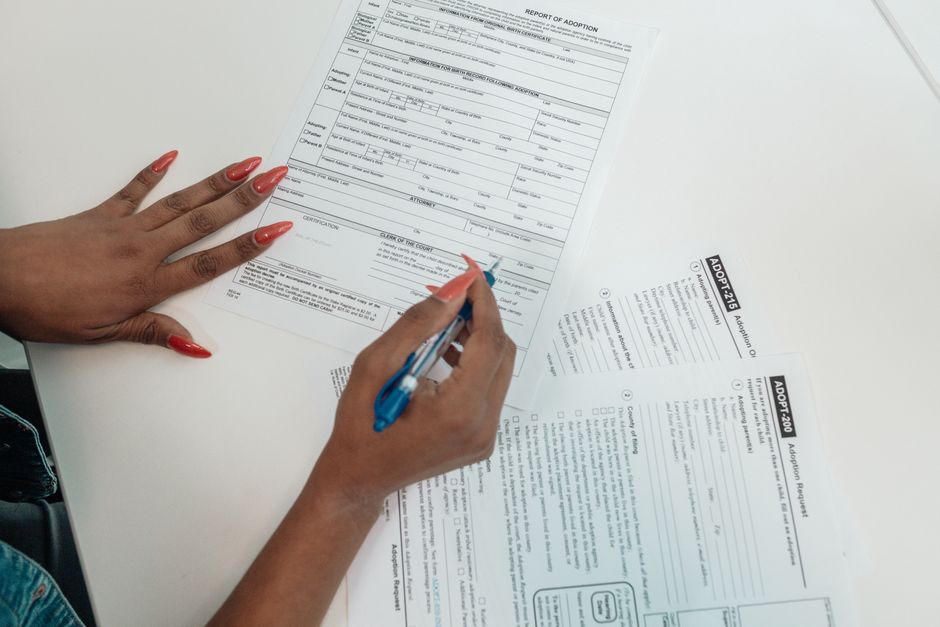
The sequence below is the common shape. Jurisdictions reorder the middle steps, but the gates are the same.
- File the application and pay the fee. Fees split into state and local in two-tier states. In Colorado, both state and local fees attach to a new license application.
- Completeness check. A clerk or examiner reviews the file and sends a deficiency letter. New York’s examiners separate items needed to finish the review from items that can be submitted later as conditions of approval, which is why some applicants get a conditional approval rather than a flat yes or no.
- Posting and publication. A sign goes up at the premises and a notice runs in the local paper. In New Mexico, the posting period is part of why the clock runs 120 days or more, and the state cannot issue a license until posting is complete.
- The objection window or public hearing. This is the decision point. In a local-board state, a hearing happens whether or not anyone objects. In an examiner state, the hearing only materializes if someone files a protest.
- The vote or sign-off. Either a board votes in open session, or an examiner and supervising board approve on paper. In New Mexico the director grants preliminary approval, then the file goes to the local option district for its own decision, then back for final approval.
- Issuance. Final fees, inspections, and the physical license.
In Colorado the fourth and fifth steps can overlap with state review. Under the state’s concurrent application review rule, a local authority or an applicant with local approval can ask the state to review before the local authority’s final decision, and the state then issues the license once it receives evidence of final local approval.
Why applications get delayed or denied
Paperwork errors cause delay. Objections cause denial. The two failure modes are different and they are not equally fixable.
A documented example makes the point. In 2025, Pitkin County commissioners voted 3-2 to deny a new on-premises license for a Redstone wine shop, citing neighborhood sentiment and unresolved parking issues; two commissioners wanted conditional approval instead. Nothing in that file was a form filled out incorrectly. The application failed on the record built by neighbors at a hearing, which works much the same way as other local board hearings and objections where turnout in the room shapes the outcome.
The recurring denial grounds across jurisdictions are narrow and predictable:
- Proximity rules. Distance minimums from schools, churches, or other licensed premises. New York’s 500-foot law is the best known, and contested 500-foot cases go straight to the Full Board.
- Zoning and use conflicts. Parking, hours, occupancy, and whether the use is permitted at all.
- Applicant record. Criminal history, prior liquor violations, or a revoked license elsewhere. New Mexico’s statute directs the director to specifically weigh prior Liquor Control Act violations and citations issued in the previous five years.
- Unverified funding. Boards want to know whose money is behind the business. Incomplete financial disclosure stalls files for months.
- Community opposition. In New York City, applicants must notify the community board at least 30 days before the authority’s decision, and the community board’s opinion becomes part of the record the state uses in deciding.
The one structural lever an applicant controls is sequencing. Where concurrent review exists, submitting state and local paperwork in parallel rather than waiting for the local vote can compress a multi-week handoff. Pitkin County notes its state review takes about three weeks on its own, and that the concurrent-review fee option lets the clerk send the file to the state before the local hearing.
How long does it actually take?
There is no national answer, but there are documented ranges worth planning against.
New Mexico’s agency says the process runs about 120 to 150 days start to finish, and that includes a preliminary hearing within 30 days, a posting period, and a separate decision by the local option district. Colorado’s local-then-state structure in Pitkin County means at minimum 30 days before a hearing can even be scheduled, plus roughly three weeks of state review after local approval.
Examiner-only states move faster because there is no hearing to calendar. The review ends when the examiner finishes, which can be a matter of weeks for an uncontested file.
What extends a timeline is consistent everywhere: an incomplete application that triggers a deficiency letter, a protest that forces a hearing, a board that meets only twice a month, and holiday or seasonal backlogs when hearing calendars compress. A file that would clear in six weeks uncontested can run six months once a single objection lands.
FAQ
Can a denied applicant appeal? Generally yes, through an administrative route before any court. In New York, an applicant whose file is disapproved may request reconsideration or a review that includes an administrative hearing followed by Full Board review, and may seek judicial review after that. In Colorado, the hearings division issues an initial decision and the state licensing authority issues the final determination, with 30 days to apply for review under C.R.S. 44-3-802. The mechanics resemble appealing a local decision in other settings: strict deadlines, a record that was built at the original hearing, and limited room for new evidence. A liquor attorney licensed in the state is the right person to assess any specific denial.
Does a quota license transfer with the business? Usually only with board approval. The license is an asset separate from the business, and a person-to-person transfer has to be approved by the issuing authority. Many licenses are also premises-specific, so moving locations requires a place-to-place transfer or an entirely new application.
What happens at a hearing if a neighbor objects? The board takes public comment on the record, then votes. Objections about noise, parking, hours, and density carry weight because most statutes let boards consider community conditions. Boards frequently split the difference with conditional approval limiting hours or operations rather than issuing an outright denial.
Is a liquor license the same as a business license? No. A liquor license is a separate privilege layered on top of standard business registration, and in several states local authorities want proof of a local business license or zoning clearance before the state will even review the alcohol application.
The decision rule worth carrying away: before filing anything, find out whether your jurisdiction caps licenses by population. If it does, your project is a purchase negotiation and a transfer approval, not an application. If it does not, your real deadline is the objection window, not the filing date, and the work that matters is talking to the neighbors and the zoning office before the hearing notice goes up.