The REAL ID deadline already passed. Federal enforcement started May 7, 2025, and a standard driver’s license without the star marking no longer works on its own to board a domestic flight or enter certain federal facilities. You need a REAL ID, a passport, or another TSA-accepted document instead. If you show up without one, TSA runs an identity verification process rather than simply turning you around.
Has the REAL ID deadline actually passed, or is it delayed again?
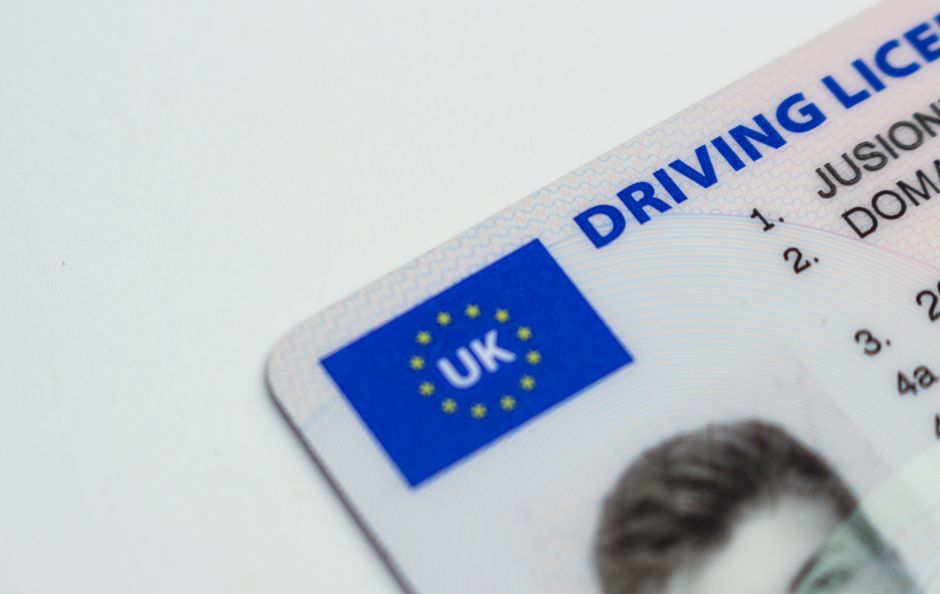
It passed. TSA’s own REAL ID FAQ states plainly that enforcement began on May 7, 2025, and that federal agencies may only accept state-issued licenses and ID cards for official purposes when the card carries the REAL ID star marking. That date came after roughly two decades of postponements following the REAL ID Act of 2005, which is why so many people assumed another extension was coming.
What makes this confusing is a second rule published two months earlier. On January 14, 2025, DHS finalized a phased approach to card-based enforcement, which let individual federal agencies keep accepting non-compliant licenses for a limited transition period if they coordinated a written plan with DHS and posted it publicly. Agencies that did not adopt a phased plan had to begin full enforcement on May 7, 2025.
The phasing is not an extension of the deadline. It is a transition mechanism for individual agencies, and whether a particular federal building is operating under one is a question for that agency rather than for TSA.
At airports, the practical picture in 2026 is that the grace-period behavior of mid-2025 is over. In the first weeks of enforcement, travelers without a compliant ID were generally routed to extra screening and still allowed through. What replaced it is a defined verification procedure, described in the next section.
What happens if you show up without a REAL ID now

You are not automatically turned away, but you are no longer waved through either. TSA’s acceptable ID guidance says that a traveler who arrives without an acceptable form of identification may still be allowed to fly after completing an identity verification process at the checkpoint, which involves answering questions to confirm who you are, and that anyone who declines or cannot be verified will not be allowed through security. Build in extra time, because that process happens on top of the normal line.
The cheaper path is simply carrying a document already on the list. TSA’s acceptable identification page includes a U.S. passport or passport card, DHS trusted traveler cards such as Global Entry, NEXUS, SENTRI, and FAST, a Department of Defense ID including dependent IDs, a permanent resident card, a tribal photo ID, a Transportation Worker Identification Credential, and a Veteran Health Identification Card. A temporary paper license is not acceptable, which matters because that is exactly what you walk out of the DMV holding after a REAL ID appointment.
Airport rules are not the only ones in play. TSA notes that a compliant ID or acceptable alternative is also required for accessing federal facilities and entering nuclear power plants, and that the Nuclear Regulatory Commission moved to full enforcement at licensed nuclear plants on the original May 7, 2025 date. Individual buildings vary, so the agency you are visiting is the authority on what it will accept at the door.
None of this touches your ability to drive. A standard license without the star is still a valid license for driving, for state and local transactions, and for ordinary commercial uses that are not governed by the federal rule. This is a document-acceptance rule at federal checkpoints, not a driving privilege rule.
REAL ID vs. standard license vs. Enhanced License

Three different cards get mixed up in this conversation, and they do three different jobs.
A REAL ID is a regular state license or ID card issued under the federal minimum standards, marked with a star in the upper portion of the card. It does everything a standard license does, plus it satisfies the federal identity requirement at TSA checkpoints and federal facilities.
A standard license still works for driving, voting, and everyday state business. What it lost on May 7, 2025, is federal acceptance. Some states print a notice on the face of the card saying it is not acceptable for federal purposes.
An Enhanced Driver’s License (EDL) is a separate animal. It proves citizenship as well as identity, which lets it double as a border-crossing document for land and sea entry from Canada, Mexico, and some Caribbean countries. EDLs are not issued everywhere. TSA’s FAQ identifies Washington, Michigan, Minnesota, New York, and Vermont as the states issuing enhanced licenses, and confirms they are accepted for REAL ID purposes.
| Card | Star marking | Valid at TSA checkpoint | Land/sea border crossing | Where available |
|---|---|---|---|---|
| REAL ID license or ID | Yes | Yes | No | All states and territories |
| Standard license or ID | No | No | No | All states |
| Enhanced license or ID | Usually a flag/EDL marking instead | Yes | Yes | WA, MI, MN, NY, VT |
If you live in an EDL state and travel to Canada or Mexico by car or cruise, the enhanced card is the more useful purchase. If you never cross a land border, it buys you nothing extra over a REAL ID.
How the DMV actually verifies you for a REAL ID

The gold star is not a sticker the clerk applies because you asked nicely. It certifies that the state collected and verified a specific document set: one proof of identity and date of birth, proof of your Social Security number, two proofs of in-state residency, and evidence of lawful status in the United States.
The verification is electronic, not just visual. States run your Social Security number against SSA records through the AAMVA Social Security Online Verification service, and they run lawful status through the DHS Systematic Alien Verification for Entitlements program. Indiana’s BMV describes SAVE as the service that lets it confirm an applicant’s lawful status, notes that verification can take up to two weeks, and states that a credential is not issued at all when status cannot be verified. The California DMV similarly says REAL IDs are issued only after lawful presence is confirmed through the federal SAVE system.
In states that publish guidance on this, an initial automated check often resolves during the visit, and the delay appears when that first check comes back inconclusive and the record goes to an additional verification step measured in days rather than minutes. Indiana’s own page puts the outer bound at two weeks, and it is a common reason an otherwise routine appointment ends without a card in hand.
That document-inspection step is also why states generally require an office visit for a first REAL ID, even where a standard license can be renewed from your couch. Someone has to physically inspect original documents, photograph you, and in some states capture a thumbprint, before the state can certify compliance. Routine renewals skip that step because the verification already happened once and is on file — the same logic that governs how identity documents get verified in other screening contexts, where a one-time source-document check underpins later automated lookups.
One practical consequence: bring originals or certified copies. Photocopies and phone photos of a birth certificate fail, and a name mismatch between your birth certificate and your current legal name requires the linking documents (marriage certificate, court order) in between.
How renewal and conversion differ by state
The federal floor is uniform. Everything above it — fees, how early you can renew, whether the card prints on the spot or arrives by mail, whether a later renewal can be done online — is set by each state. That is why one friend finishes in 20 minutes and another waits a month for plastic.
| State | First REAL ID in person? | Enhanced license offered? | Online renewal after you have a REAL ID | Card delivery | State-specific detail |
|---|---|---|---|---|---|
| California | Yes — apply online, finish at a field office | No | Renewals allowed online for eligible drivers | Mailed; temporary paper card in the meantime | No REAL ID surcharge; you pay the normal license or ID fee |
| North Carolina | Yes | No | Yes, a second consecutive time if you had an in-person transaction with a new photo since the last renewal | Mailed | As of November 8, 2026, Class C licenses can be renewed at any time, with no six-month window |
| New York | Yes | Yes | Available online for eligible drivers; the DMV directs you to an office when a new photo or document check is due | Mailed | EDL and REAL ID are separate options at the same visit |
| Michigan | Yes | Yes | Available online for eligible drivers; Michigan requires an office visit periodically for a new photo | Mailed | EDL doubles as a Canada land-crossing document |
| Indiana | Yes | No | Available online for eligible drivers between required in-person cycles | Mailed within 14 days once lawful status clears | Lawful status verification alone can take up to two weeks |
North Carolina is the clearest example of how much state mechanics move. NCDMV’s renewal page states that as of November 8, 2026, regular Class C licenses can be renewed at any time rather than only within six months of expiration, and that those early renewals can be done online. It also sets out the two-consecutive-online-renewals rule: non-REAL ID licenses and state IDs can be renewed online twice in a row, while REAL ID cards qualify for a second consecutive online renewal only if there was an in-person transaction with a new photo since the last one. Renewing earlier than six months out carries a replacement fee of $16.75 plus $6.50 for each additional year added.
California runs the opposite model: you do the paperwork at home and the verification in an office. The DMV lets first-time REAL ID applicants start the application online and upload documents, then requires a field office visit to take the photo and finalize. There is no separate REAL ID surcharge — you pay the standard license or ID card fee for the transaction.
New York folds the choice into one visit, since the state issues both REAL ID and Enhanced licenses. The NY DMV’s enhanced or REAL ID page lays out which proofs each option requires and how to convert before your normal renewal date.
Fees are the most commonly misreported number online. No state charges a federally mandated REAL ID fee, because there isn’t one; what you pay is that state’s license or ID transaction fee, sometimes with an early-renewal or duplicate-card charge on top. Check your own DMV’s fee schedule rather than a national roundup, since several states adjusted fees during 2025 and 2026.
Frequently asked questions

Can you still renew a standard license instead of upgrading?

Yes. REAL ID is optional. Several states explicitly keep the non-compliant option open and, as North Carolina shows, sometimes give non-REAL ID holders the easier online renewal path.
Does a passport make REAL ID unnecessary?
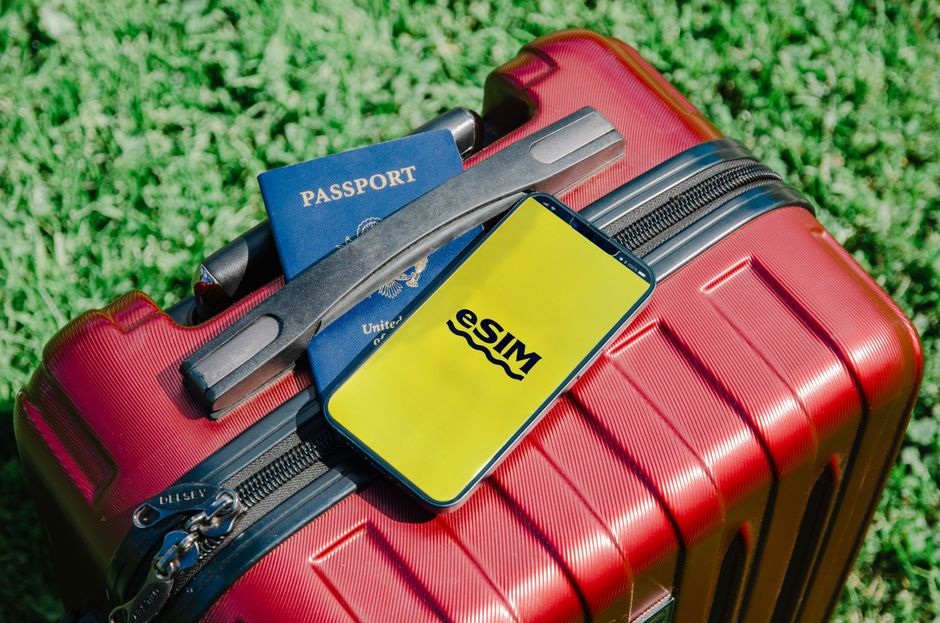
For flying, yes — TSA says you only need one acceptable form of ID, not both. The tradeoff is practical rather than legal: a passport book is bulkier, more expensive to replace, and more painful to lose than a license. A passport card is a cheaper middle ground for domestic flights and land borders.
What if your application is rejected over a document mismatch?

The usual culprits are a name chain that doesn’t connect, a residency document in a spouse’s name, or a SAVE response the system cannot resolve automatically. States generally cannot issue the compliant card until the underlying record is corrected, though most will still issue or renew a standard, non-compliant credential so you are not left without a license. Correcting a federal immigration record runs through USCIS, not the DMV.
Does a temporary paper license work at the airport?

No. TSA excludes temporary licenses, so if your flight falls inside the window between your DMV visit and the arrival of the plastic card, plan on carrying a passport.
Should you convert now or wait?

A simple decision rule: if you fly domestically more than once a year and don’t already carry a passport in your wallet, make the DMV trip before your next booked flight, because the alternative is a checkpoint identity verification every time you travel. If you rarely fly and already hold a valid passport, no deadline is forcing you to act — convert whenever your license next comes up for renewal, and let the state’s normal renewal cycle absorb the paperwork.
One caveat either way: check your state’s early-renewal rules first. In a state like North Carolina, renewing ahead of the normal window costs a replacement fee, so the cheapest conversion is usually the one timed to your existing expiration date rather than the one done in a panic three weeks before a trip.