Small claims court is a stripped-down civil court for money disputes under a set dollar limit, usually somewhere between $2,500 and $25,000 depending on the state. You fill out a claim form, pay a filing fee, get the other party served, and stand in front of a judge or magistrate without a lawyer. Most cases finish in a single hearing, typically 30 to 90 days after filing.
That is the short version. What follows is the part most guides skip: what the limits and fees actually are in specific states, what happens in the room, and the point at which filing in small claims becomes the wrong move.
What is small claims court, and who is it for?

Small claims is a division of an existing court, not a separate building. In California it sits inside the Superior Court, in Florida inside the County Court, and in Texas the function was folded into the justice of the peace courts, where the Texas State Law Library notes that parties often represent themselves rather than hiring an attorney. There is no jury. Evidence rules are relaxed, and the judge usually asks questions directly instead of waiting for objections.
The case types are predictable: unpaid personal loans, withheld security deposits, contractor work that was never finished, car and property damage, unpaid invoices, and small breach-of-contract fights. Claims over defective goods and service plans also land here, which is why understanding the difference between warranty, guarantee, and service contract disputes matters before you decide what you are actually suing over. The same is true of disputes that turn on a professional opinion about condition or value, where appraisal, inspection, and assessment disputes often hinge on a document you will need to bring to the hearing.
There are limits on what the court can order. Washington’s small claims department, for example, handles the recovery of money only, so you cannot use it to force someone to return a car or finish a job. You can sue for the dollar value instead.
Individuals can always file. Businesses usually can too, but often with strings attached: California caps business plaintiffs at half the individual limit, and in New York, corporations and partnerships are routed to a separate Commercial Small Claims part rather than the regular small claims docket.
Small claims court limits, fees, and timelines by state

The numbers below are for six representative states as of September 2026. They come from state court and state government sources where those exist, and from current state guides where the courts do not publish a single statewide figure. Fees in Texas, Florida, and Washington are set county by county, so treat those as typical ranges, not statewide prices.
| State (court) | Dollar limit | Filing fee | Typical wait to first court date | Lawyers at the hearing |
|---|---|---|---|---|
| California (Superior Court) | $12,500 individuals, $6,250 businesses | $30-$75 by claim size; $100 for frequent filers | About 1 to 2.5 months | Barred from representing a party |
| Texas (justice court) | $20,000 | Roughly $31-$84 by county, plus service | 30 to 60 days | Allowed |
| Florida (County Court) | $8,000 | Roughly $55-$300 by claim tier | Pretrial conference around 30-45 days | Allowed |
| New York (NYC Civil Court) | $10,000 NYC; $5,000 most city courts; $3,000 town and village | $15 or $20, mailed service included | Roughly 4 to 8 weeks, evening sessions | Allowed |
| Washington (District Court) | $10,000 individuals, $5,000 entities | Set by county; $50 in Thurston County | Varies by county | Barred without the judge’s permission |
| Connecticut (Superior Court) | $5,000; $15,000 for registered home improvement contracts | $95 | Varies; hearings are held remotely | Allowed |
A few of these deserve unpacking. California’s tiered fee is fixed by statute, so the fee is the same in every county: $30 up to $1,500, $50 up to $5,000, and $75 above that, with $100 for plaintiffs who have filed more than 12 cases in a year. New York is the cheapest of the six by a wide margin, because the Civil Court charges $15 for claims up to $1,000 and $20 above that, and the clerk gives you a hearing date, usually for a 6:30 p.m. session. Connecticut is the outlier on scope: the general cap is $5,000, but home improvement and new home construction contracts with registered contractors go up to $15,000.
Florida’s fee schedule is where published sources disagree. One current guide lists the tiers as $55, $170, and $300, while another lists $55, $80, and $175 plus roughly $10 per summons and $35-$60 for service. Both are describing county clerk schedules that vary, so the clerk’s posted fee sheet in your county is the only figure worth relying on.
One widely repeated number is simply out of date. Plenty of pages still list California’s limit as $10,000 for individuals and $5,000 for businesses. The individual cap moved to $12,500 effective January 1, 2024, and business plaintiffs to $6,250.
How to file a small claims case, step by step
Filing and serving the other party

1. Confirm the court and the amount. You generally file where the defendant lives or where the dispute happened. Check your state’s cap before anything else, and check whether it differs for businesses.
2. Decide what to do if your claim is over the limit. In most states you can waive the excess and sue for the cap. Texas is a notable exception: the Texas State Law Library states plainly that you cannot agree to accept less money just to keep the case in justice court, because the $20,000 ceiling is jurisdictional under Section 27.031 of the Government Code. If a guide tells you waiving the excess always works, it is wrong in at least one large state.
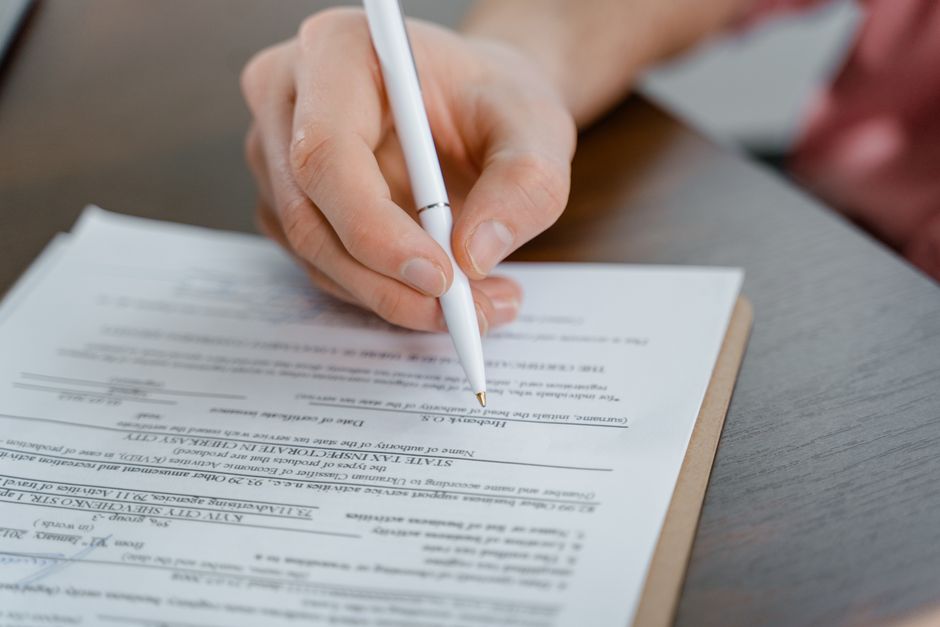
3. Fill out the claim form. Every state has its own: SC-100 in California, a Statement of Claim in Florida and New York, a Notice of Small Claim in Washington, a Small Claims Writ and Notice of Suit in Connecticut. Name the defendant exactly as the entity is registered, not by its storefront name. Getting the legal name wrong is the most common reason a winning case produces an uncollectible judgment.
4. Pay the fee, or apply to have it waived. Every state in the table has a hardship waiver, filed as a fee waiver application, a Statement of Inability to Afford Payment of Court Costs, or a civil indigence application.
5. Serve the defendant. Methods vary more than filers expect. Washington’s attorney general’s office describes serving notice on the defendant by registered or certified mail with return receipt as an alternative to personal service. New York does the work for you: the clerk mails the notice, so most claimants never hire a process server. Florida and Texas use the sheriff or constable, a certified process server, or certified mail. File the proof of service before your hearing date, because no proof means no hearing.
The hearing and getting a judgment enforced
6. Watch for the defendant’s response. The defendant may answer, file a counterclaim, or offer to settle. Several jurisdictions build settlement into the calendar. Florida schedules a mandatory pretrial conference, some Florida circuits require mediation, and several Washington district court divisions run a mediation session before a trial date is set.
7. Go to the hearing and present your case. Details in the next section.
8. Collect. Winning and getting paid are separate projects. Thurston County, Washington describes the sequence after judgment: the clerk enters the judgment as a civil case within 10 business days, after which you may pursue garnishment of wages or bank accounts, or execution against vehicles and other personal property. That same page makes the uncomfortable point directly: if the defendant has no money, you will likely not collect. Judgments last a long time, 10 years in Connecticut and renewable in most states, so an uncollectible judgment today is not necessarily worthless in three years.
What to expect at the hearing

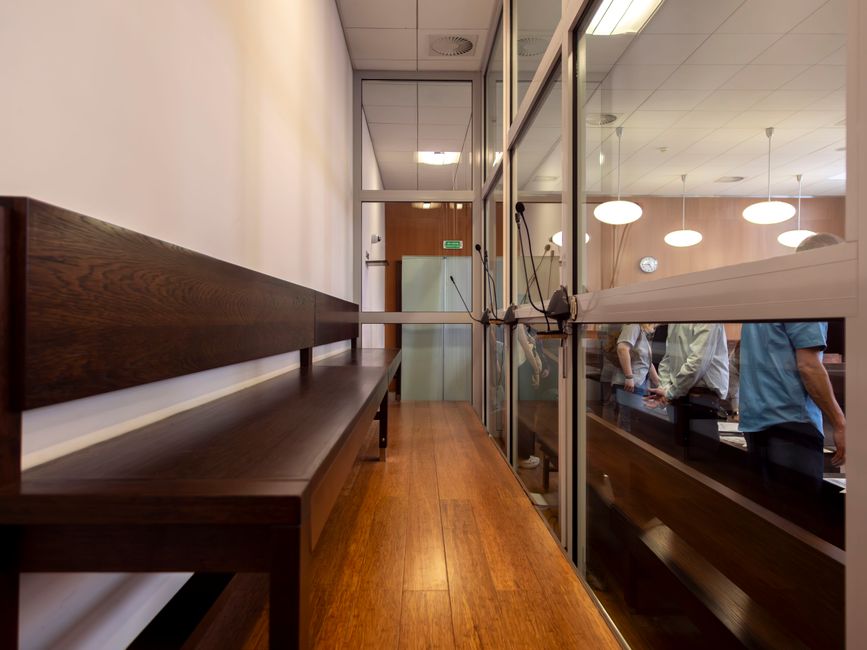
Plan for 10 to 30 minutes, not a day. Washington’s self-help materials note that many small claims trials take 30 minutes or less, and in a busy urban court your slot may be shorter than that. Cases are stacked, so several parties will be waiting in the same room or the same video call.
The format is conversational. You tell the judge what happened and hand up your documents; the other side responds; the judge asks the questions that actually matter. There is rarely formal cross-examination. Connecticut’s small claims cases are mostly heard by magistrates rather than judges, and the Judicial Branch’s guide notes that small claims cases are not recorded, so no transcript exists. Connecticut also moved its small claims hearings to remote video sessions, so check the format before you plan a drive.
Bring three copies of everything: one for the judge, one for the other side, one for you. Put them in the order you will refer to them, and lead with the document that proves the number. A contract, invoice, text message admitting the debt, or repair estimate beats a long narrative every time.
The judge may rule from the bench or mail a decision within a couple of weeks. Either way, you get a written judgment; that paper, not the judge’s spoken words, is what you enforce.
When small claims court stops making sense

Three tests decide this, and they are easier to apply than a general "it depends."
Test one: how far over the limit are you? If the overage is smaller than what a lawyer would cost to recover it, waive it and file in small claims, in the states that allow waiver. If the overage is larger than a few thousand dollars, a limited civil or county court filing is the better trade, even though it takes longer and usually requires counsel.
Test two: does the case need machinery small claims does not have? Small claims has essentially no discovery. If proving your case requires subpoenaing a company’s internal records, deposing a witness who will not show up voluntarily, or paying an expert to testify about construction defects or diminished vehicle value, you are trying to run a real trial in a court designed for receipts. Multiple defendants blaming each other is the same problem in a different shape.
Test three: can you live with the appeal rules? This is the one that surprises people. In Connecticut, the Judicial Branch’s own publication states you may not appeal a small claims judgment; the alternative is transferring the case to the regular docket before judgment. Washington restricts appeals by amount: no appeal is allowed if the original claim was under $250, and a party who brought the claim or counterclaim must have claimed more than $1,000 to appeal. King County adds the practical cost, noting a $280 Superior Court filing fee for the appeal on top of a 30-day deadline. In New York City, choosing the free arbitrator instead of a judge also waives your right to appeal.
On lawyer economics: for a $3,000 dispute, hourly fees will usually exceed the recovery, and in California and Washington a lawyer cannot appear for you at the hearing anyway. Consulting one for an hour before you file is a different question from hiring one to appear. If your dispute involves a statute that awards attorney fees to the winner, such as certain landlord-tenant or consumer protection claims, the math changes, and that is worth asking a qualified attorney in your state about.
Frequently asked questions

Can you sue a business or a landlord? Yes, as long as the amount is within the limit and the business can be served in that jurisdiction. Sue the registered legal entity, which you can look up through the secretary of state, not the brand name on the sign. Security deposit cases get special treatment in some states: Connecticut allows recovery above the $5,000 cap in landlord security deposit cases, and double damages may be available.
Do you need a lawyer? No. In two of the six states above you cannot use one at the hearing. Washington’s attorney general’s office states that attorneys and paralegals are excluded from appearing or participating unless the judge grants permission. Texas, Florida, New York, and Connecticut permit attorneys, but most parties appear on their own.
What if the other side does not show up? If service was properly completed, the court generally enters a default judgment for the plaintiff. You may still have to prove your damages briefly, and the defendant usually has a window to ask the court to reopen the judgment, four months in Connecticut and up to a year in New York City.
Can you file as a business? Usually, with limits. Washington caps entity plaintiffs at $5,000 against $10,000 for individuals, California caps businesses at $6,250, and New York sends corporations and partnerships to a separate commercial part. California also limits how many large claims one plaintiff can file per year.
Before you pay a filing fee, do one thing first: send a dated written demand giving the other side 10 to 14 days to pay. It settles a meaningful share of disputes without a case number, and if it fails, it becomes the first exhibit you hand the judge.