This article was researched and written in English for international readers, using the official and media sources listed below.
The Short Answer
Japan’s constitution contains a clause, Article 9, that renounces war and prohibits the maintenance of war potential. For decades that provision shaped a defense posture built almost entirely around absorbing an attack and waiting for the United States to respond. In December 2022, the government of Prime Minister Fumio Kishida adopted three interlocking strategic documents — the National Security Strategy, the National Defense Strategy, and the Defense Buildup Program, collectively called the Three Documents — that declared the acquisition of what Japanese officials call “counterstrike capability.” The move is the most consequential shift in Japanese defense policy since the postwar constitution took effect. It does not repeal Article 9, but it reinterprets what that article permits, and that distinction matters enormously for Tokyo’s allies and neighbors.
How the System Works

Article 9 of Japan’s constitution, adopted after World War II, has long been interpreted by successive governments to mean that a purely defensive military force — called the Japan Self-Defense Forces (JSDF) — is constitutionally permissible, while offensive weapons platforms and any capacity to project force onto foreign territory are not.
That framework produced a concept called senshu bouei, or exclusively defensive defense, under which Japan would absorb a first strike and rely on the Japan-U.S. security alliance for any counteroffensive response. The United States, under treaty obligations and with forces based in Japan, was expected to strike enemy territory if necessary.
The 2022 National Security Strategy, approved by the Cabinet on December 16, 2022, changes the analysis without formally amending the constitution. The document describes Japan’s security environment as “as severe and complex as it has ever been since the end of World War II,” pointing to rapid military buildups, including nuclear weapons and missiles, in Japan’s immediate vicinity, and to what it characterizes as “mounting pressures by unilaterally changing the status quo by force.” It also notes that Russia’s invasion of Ukraine demonstrated that the foundational rules of the international order can be breached by a permanent member of the UN Security Council, and that a similar situation “cannot be precluded” in the Indo-Pacific.
On that basis, the strategy argues that Japan must possess defense capabilities enabling it to “firmly defend itself on its own.” Acquiring counterstrike capability — the ability to hit an adversary’s territory with stand-off missiles — is presented not as offensive war-making but as a deterrent measure consistent with the right of self-defense recognized under the United Nations Charter. The constitutional argument is that striking a launch site after an attack has been initiated, or is clearly imminent, does not constitute prohibited offensive force, because the purpose is defense rather than aggression.
The Three Documents were decided by the National Security Council (NSC), Japan’s cabinet-level body for security coordination, and then approved by the full Cabinet. Subsequent revision of all three documents is described in public Ministry of Defense materials as an active ongoing process, with the current Defense Minister leading a dedicated “Promotion HQ for Transformation of Defense Capabilities.”
Why It Matters
The practical significance is large. If Japan fields long-range missiles capable of reaching targets on the Korean Peninsula, the Chinese mainland, or Russian territory in the Russian Far East, the strategic calculus of every government in the region changes. Potential adversaries must now factor in the possibility that a first strike against Japan could be met by Japanese weapons, not just American ones. That could strengthen deterrence. It could also lower the threshold for a pre-emptive strike against Japan, since an adversary might prefer to destroy Japanese missiles on the ground before they are used.
For South Korea, any Japanese missile capability capable of reaching the peninsula carries historical weight that makes political management sensitive. China and Russia have publicly objected to the direction of Japanese defense policy, framing it as a violation of the postwar order.
The Main Arguments
Supporters of the 2022 shift argue that the constitutional reinterpretation is legally defensible and strategically necessary. The National Security Strategy itself frames counterstrike capability as an extension of the right of self-defense, not a departure from the exclusively defensive posture. They contend that missile technology has evolved to the point where an exclusively reactive defense — waiting for missiles to land before responding — is militarily untenable.
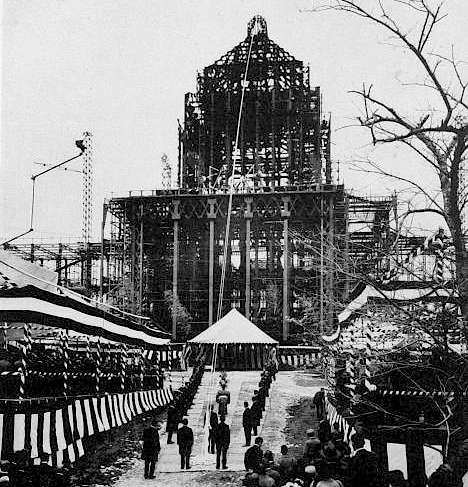
Critics, including opposition parties in Japan’s National Diet (the country’s legislature, consisting of the House of Representatives and the House of Councillors) and some constitutional scholars, argue that reinterpreting Article 9 through a cabinet decision rather than through formal constitutional amendment violates the democratic process. They also warn that acquiring strike capability blurs the line between defense and offense in ways that could accelerate regional arms races. Some argue the government has not adequately defined the legal thresholds — how imminent must a threat be, and what rules of engagement apply — before a counterstrike would be authorized.
The National Security Strategy explicitly acknowledges that Japan must “gain the understanding and cooperation of its people” for the strategy to be executed effectively, signaling that the government recognizes the domestic political challenge.
What International Readers Should Know
Several institutional details are easy to misread from outside Japan. First, Article 9 has not been amended; it remains in the constitution. The change is a policy and interpretive one, not a legislative one, which means a future government could theoretically reverse it without a constitutional referendum. Second, the JSDF is a real military force with air, sea, and ground components, but it operates under strict legal constraints that have no direct equivalent in NATO or other Western alliance frameworks. Third, Japan’s security policy is formally anchored in its alliance with the United States; the Three Documents treat that alliance as a central pillar, not a substitute for indigenous capability.
The strategy’s framing of Japan’s national interests — sovereignty, territorial integrity, the safety of its people, and an open international economic order — reflects a country that depends heavily on maritime trade routes and is acutely exposed to disruption in the Taiwan Strait, the South China Sea, and the sea lanes connecting it to the Middle East and beyond.
What to Watch Next
The Ministry of Defense has indicated that revision of the Three Documents is underway under the current Defense Minister. Key questions for observers include: which specific missile systems Japan procures and deploys, how the government defines the legal trigger for a counterstrike in binding rules of engagement, whether the National Diet passes supplementary legislation to formalize counterstrike authority, how South Korea and other regional partners respond diplomatically, and whether the United States and Japan negotiate explicit protocols for coordinating any counterstrike decision within their alliance framework. Constitutional amendment — which would require a two-thirds majority in both houses of the Diet and a national referendum — remains a separate and more politically difficult question that the current policy shift deliberately sidesteps.